




- Electric Bus Charging Upgraded: Fast & Flexible
- Shenzhen Kehua’s 40 kW High-Efficiency SiC Charging Module Achieves CE, CB, and UL Certifications
- Shenzhen Kehua Unveils High-Reliability All-in-One DC Charger for the ASEAN Market
- Shenzhen Kehua’s Scalable Megawatt Power Unit: Pioneering the Next Era of High-Power Charging for Green Mobility
- Growth Opportunities in the EV Charging Industry Amid the Global Transportation Electrification
- The Future of Fleet Charging: Building Efficient and Reliable Charging Infrastructure
The Scalability Advantage: Why Distributed EV Charging Systems Are the Future of Highway Rest Stops


Content Menu
● Why Highway Rest Stops Need a Different EV Charging Strategy
● What Is a Distributed EV Charging System?
>> Core Components of a Distributed System
>> How It Differs from Traditional Layouts
● The Scalability Advantage: Why Distributed Systems Win on Highways
>> Flexible Site Layout and UX
>> Faster Deployment and Lower Life‑Cycle Costs
● Future‑Proofing Highway Sites with High‑Power and Megawatt Charging
>> Why High‑Power DC and MCS Matter
● V2G‑Ready and PV + Storage: Turning Rest Stops into Energy Assets
>> Vehicle‑to‑Grid (V2G) and Bi‑Directional Charging
>> PV + Energy Storage Integration
● Real‑World Design Insights from Highway Charging Projects
>> Right‑Sizing Power and Connectors
>> Planning for Reliability and Maintainability
● How Shenzhen Kehua Hengsheng Enables Distributed Highway Charging
>> Company Expertise and Product Portfolio
>> Why Highway Operators and CPOs Choose Distributed Solutions from Kehua
● Practical Implementation Steps for Highway Rest Stop Owners
● At‑a‑Glance Comparison: Distributed vs Traditional Highway Charging
● Conclusion: Building Highway Rest Stops for the Next Decade of EV Growth
● FAQs: Distributed EV Charging for Highway Rest Stops
Highway rest stops are becoming critical energy hubs, not just places to refuel and grab coffee. As EV adoption surges and governments invest billions into public charging, operators are under pressure to deploy fast, reliable and scalable infrastructure along major corridors. Traditional "one‑charger‑one‑cabinet" layouts struggle to keep up with this demand, especially when traffic spikes during holidays, peak travel hours, or regional events. [chargedevs]
By contrast, distributed charging systems—with centralized power cabinets feeding multiple dispensers—offer a powerful scalability advantage that can future‑proof highway rest areas for the next decade of EV growth. [cyberswitching]
> In this article, I'll share how highway operators, CPOs and energy planners can leverage distributed EV charging architecture, high‑power DC fast charging, megawatt systems and V2G‑ready technology to turn rest stops into profitable, grid‑friendly assets—based on hands‑on project experience and the latest industry trends. [en.kehuasz]
Why Highway Rest Stops Need a Different EV Charging Strategy
Highway rest stops are very different from urban curbside or workplace charging locations, and your infrastructure strategy must reflect that. [pecnw]
Key characteristics of highway rest stops:
- Short dwell times: Drivers want to charge from 10–80% in 15–30 minutes, not hours. [greencars]
- High power demand: DC fast chargers (typically 150–350 kW per connector) are essential to support long‑distance travel. [driivz]
- Demand peaks: Traffic is highly seasonal and time‑of‑day dependent, creating intense power demand spikes. [dot.ca]
- Limited grid capacity: Many highway locations are remote or semi‑rural, with constrained grid connections. [verdek]
- Reliability expectations: Network uptime and customer experience matter more to drivers than just raw charger counts. [greencars]
Government programs such as the U.S. NEVI Formula Program and similar initiatives in Europe and Asia are prioritizing high‑power charging along highways, with dense corridor coverage and reliability requirements. This policy direction reinforces the need for smart, scalable designs rather than oversimplified stand‑alone chargers. [mazdausa]
What Is a Distributed EV Charging System?
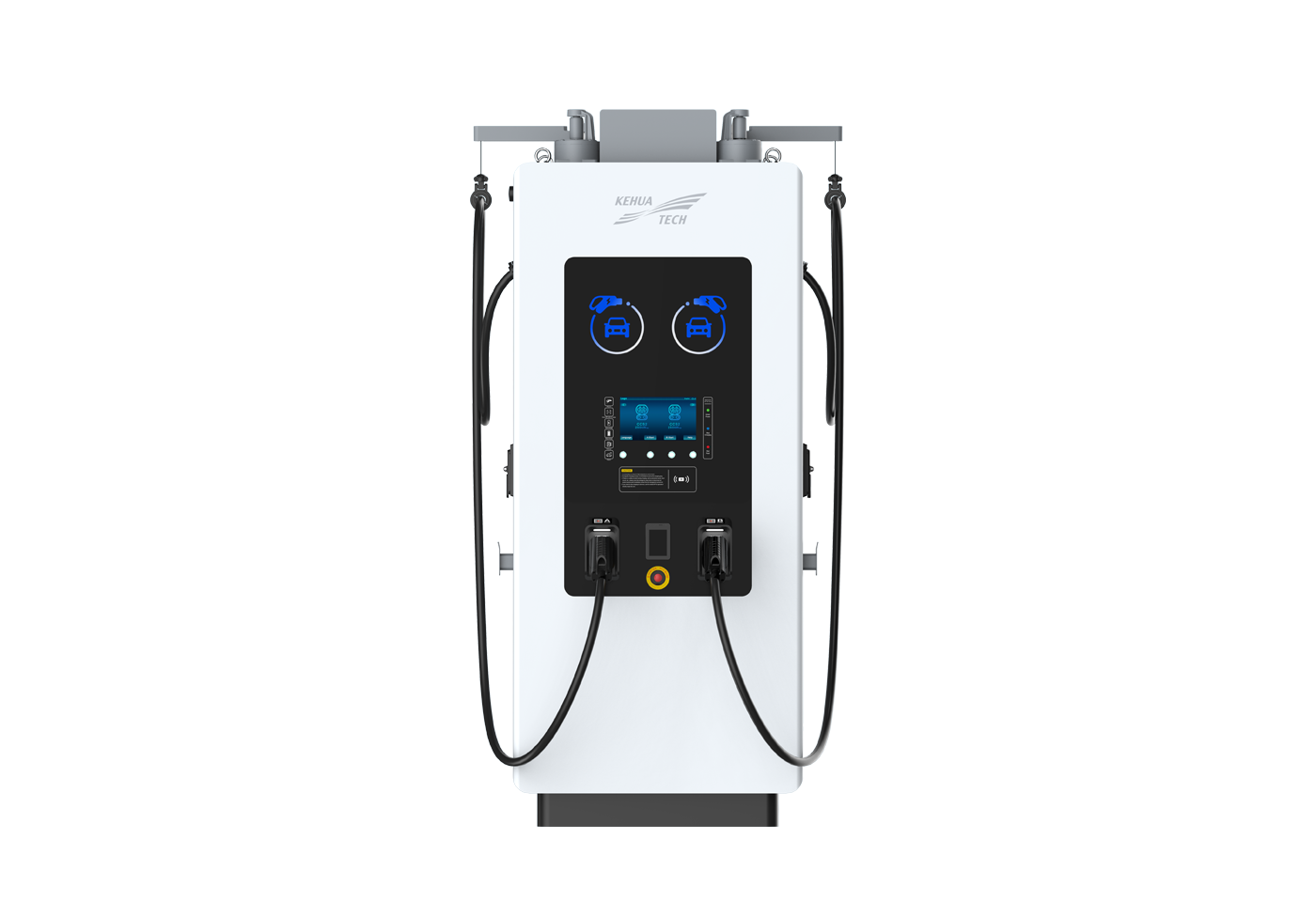
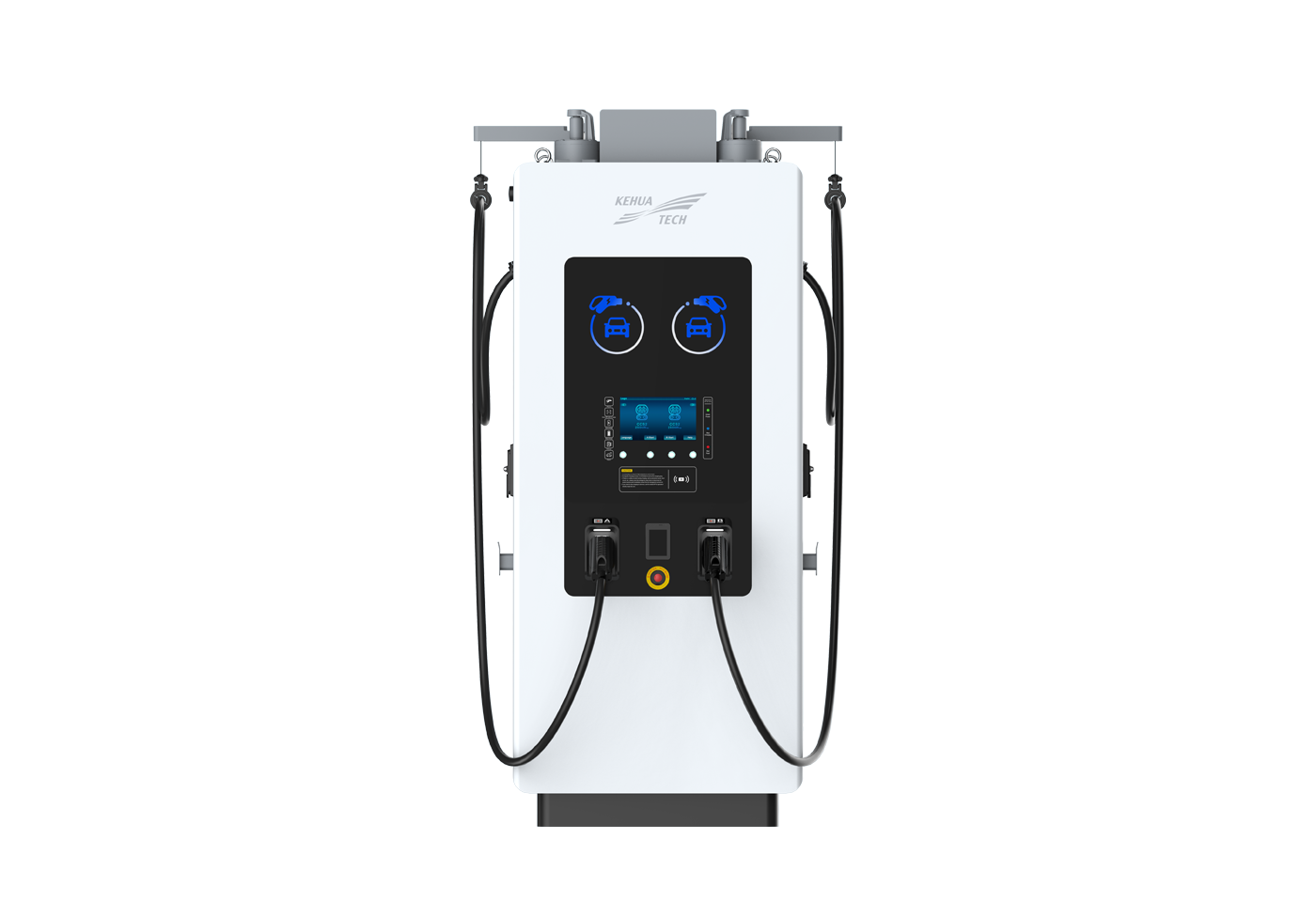
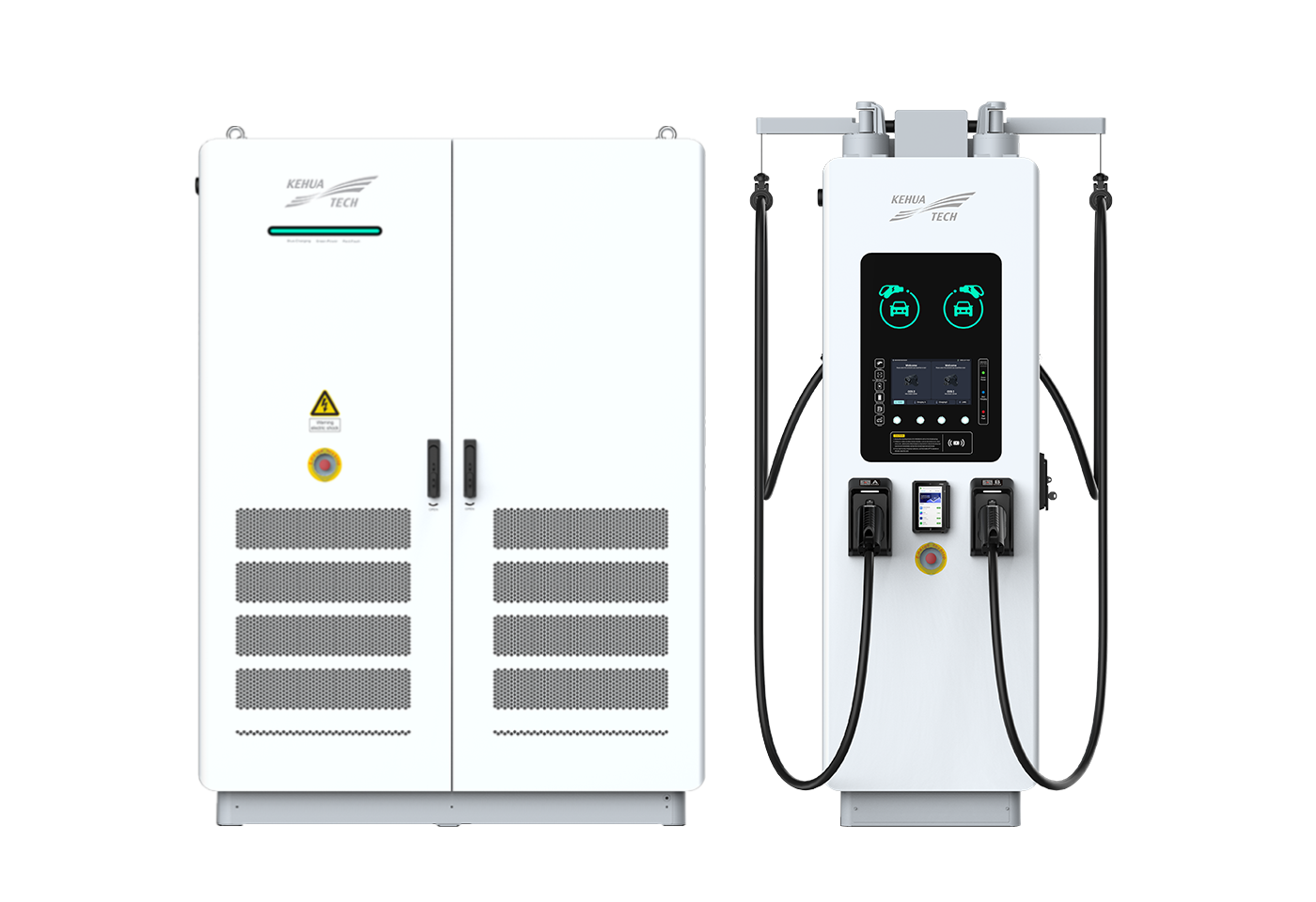
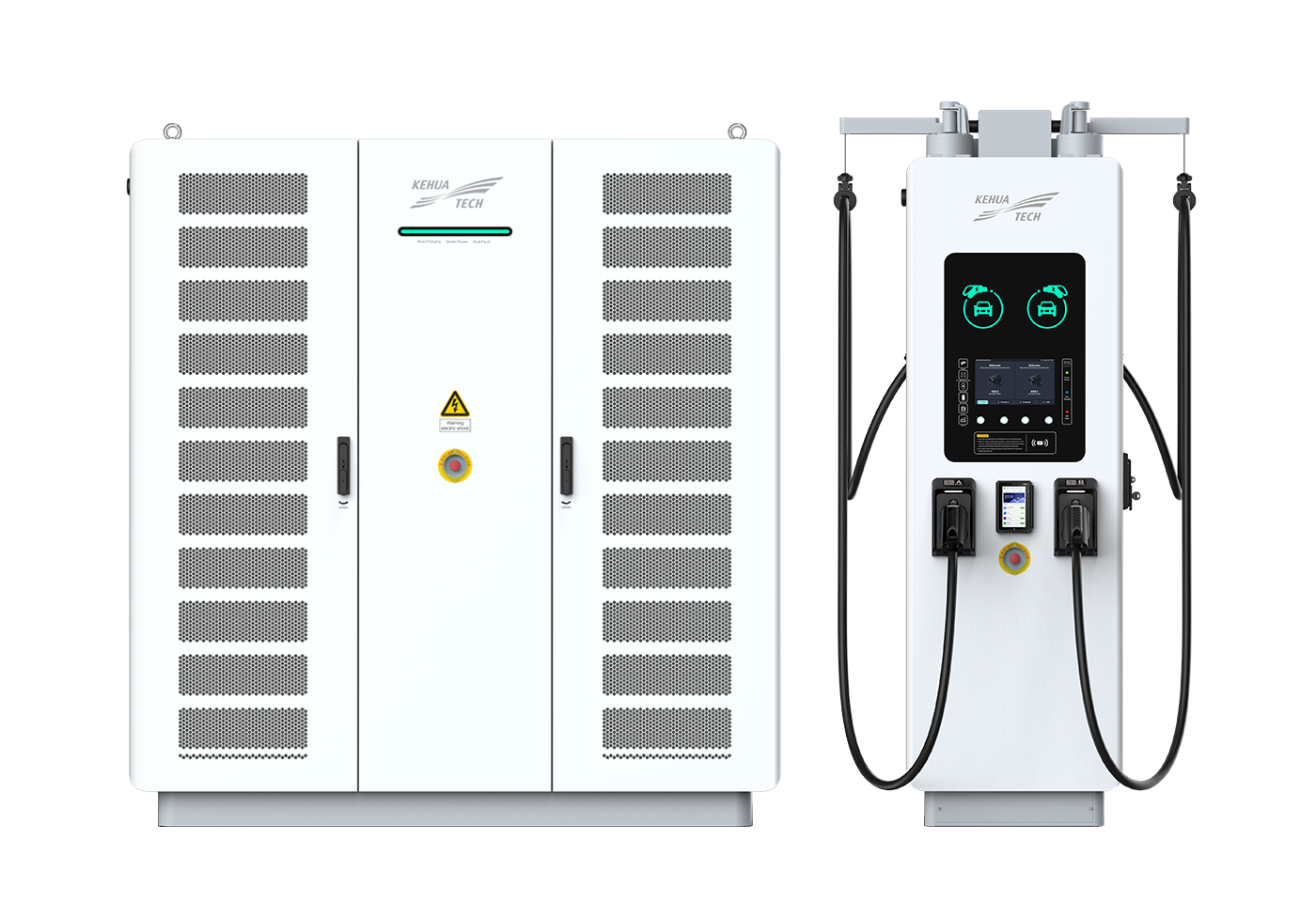
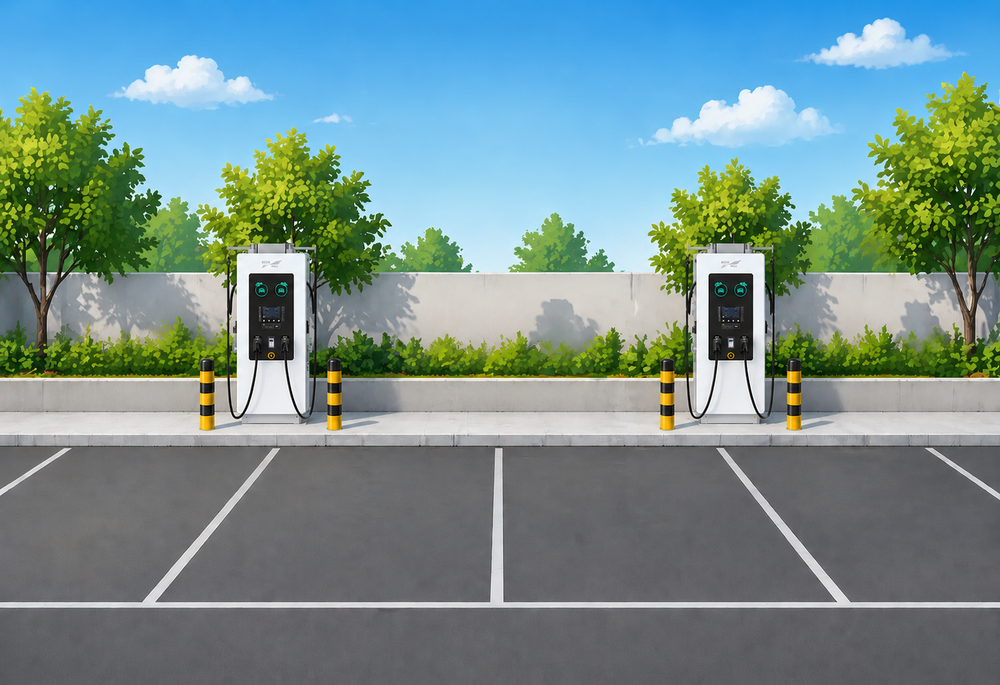
A distributed charging system decouples the physical dispensers from the power conversion hardware. Instead of every charger having its own power electronics cabinet, a central high‑power cabinet or a bank of cabinets feeds multiple satellite dispensers over DC bus lines. [chargedevs]
Core Components of a Distributed System
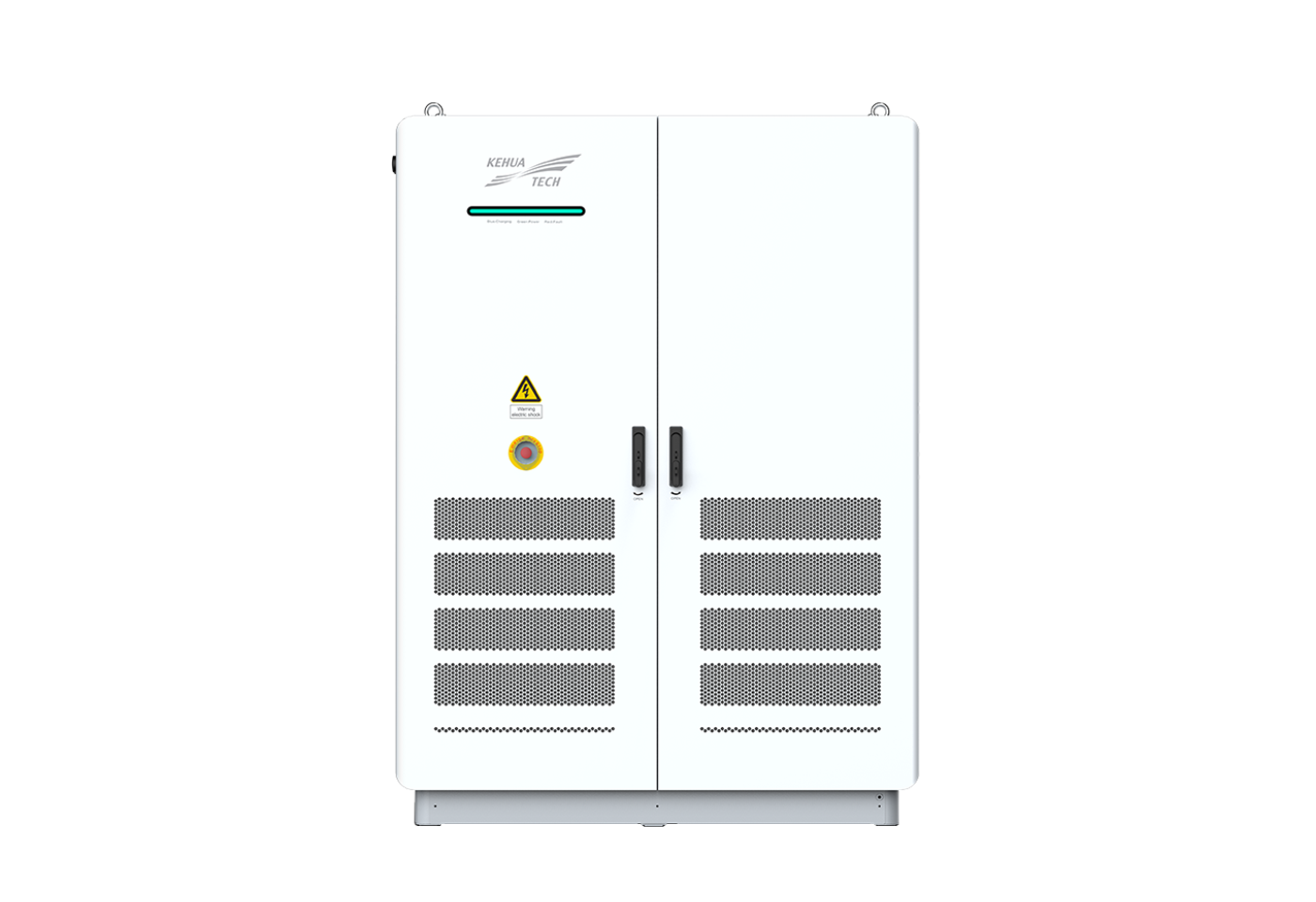
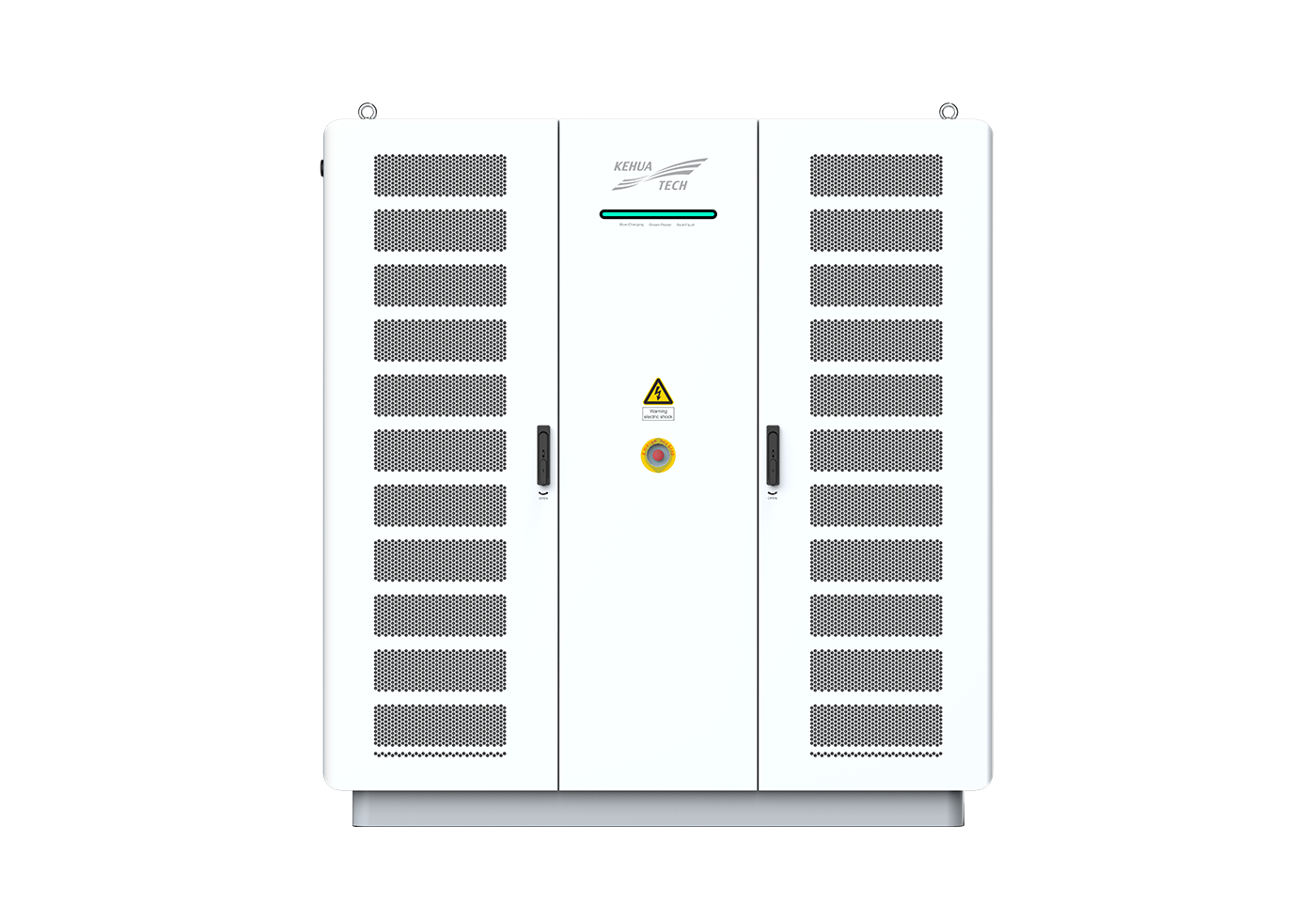
- Central power cabinets: Host DC charging modules and manage power allocation across connectors. [kempower]
- Satellite dispensers: Slim, user‑facing dispensers with cables, connectors and HMI but no large power cabinet at each bay. [chargedevs]
- Energy management system (EMS): Software that optimizes load sharing, limits peaks and coordinates with the grid and on‑site storage. [cyberswitching]
- Optional PV + storage: Integrated solar and battery systems to shave peaks, cut energy costs and increase resilience. [sepapower]
Shenzhen Kehua Hengsheng, a subsidiary of Kehua Group with more than 37 years of power electronics expertise and over 1,000 R&D engineers, delivers this type of end‑to‑end architecture—from DC charging modules to integrated PV + energy storage. [thesmartere-award]
How It Differs from Traditional Layouts
In a traditional distributed‑less layout, each charger is a largely self‑contained unit with its own rectifier and control electronics, which makes early‑stage deployment simple but limits long‑term scalability and increases infrastructure duplication. [kempower]
In a distributed layout, power modules are shared across multiple connectors, allowing dynamic allocation of kW where it is most needed and enabling operators to add new dispensers without major rework. [en.kehuasz]
The Scalability Advantage: Why Distributed Systems Win on Highways
From a highway operator's perspective, scalability is not a "nice‑to‑have"—it's a survival requirement as EV volumes grow faster than many early forecasts. [sepapower]
Modular Power Expansion
Distributed systems are inherently modular. Operators can start with a smaller number of DC modules and dispensers, then add more modules or dispensers as utilization grows—without digging new trenches or installing completely new cabinets. [chargedevs]
Scalability benefits include:
- Adding extra charging bays with minimal civil work.
- Upgrading power levels (e.g., from 150 kW to 300–400 kW per bay) simply by adding modules.
- Sharing power intelligently between bays during peak demand rather than over‑provisioning every connector. [driivz]
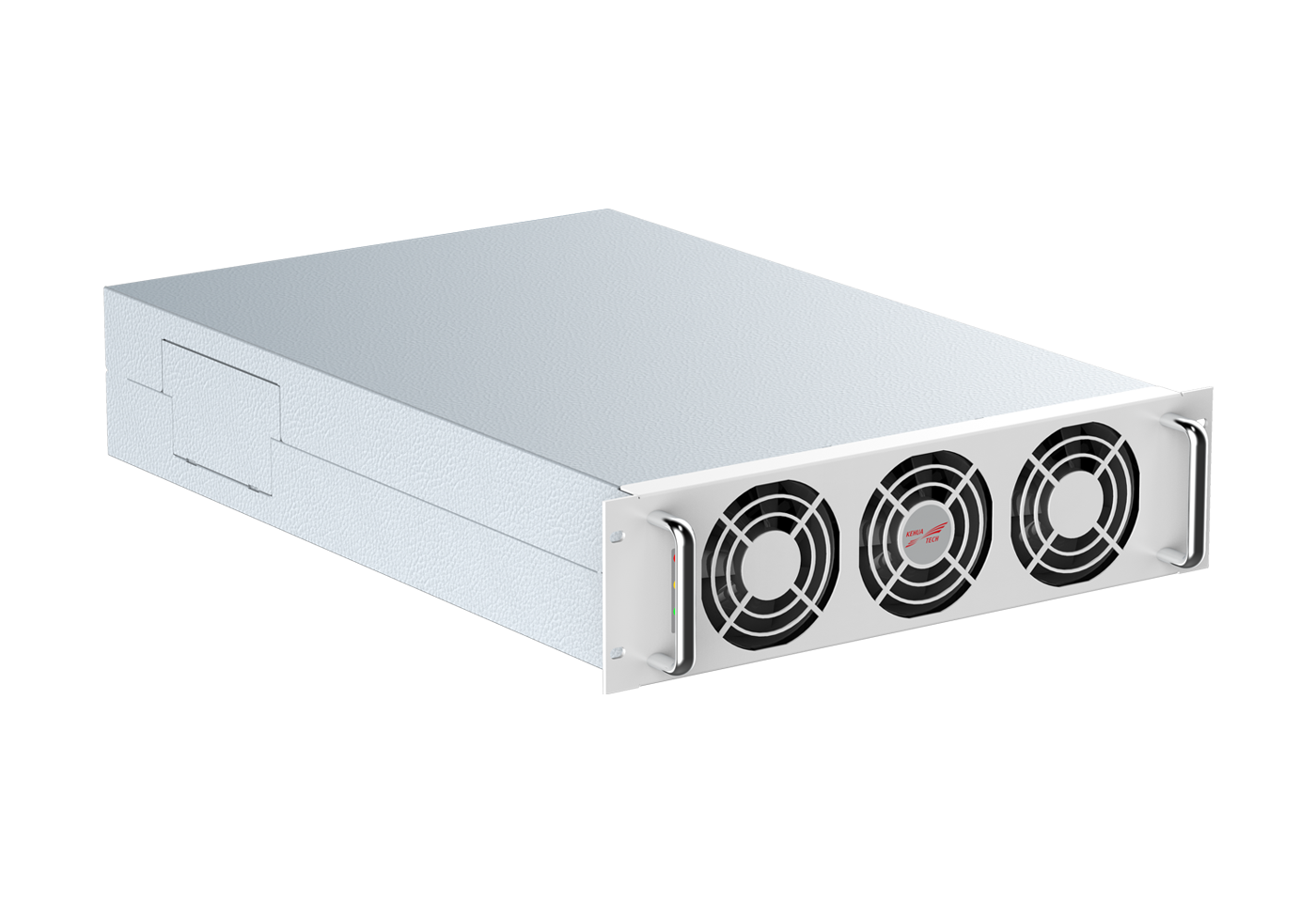
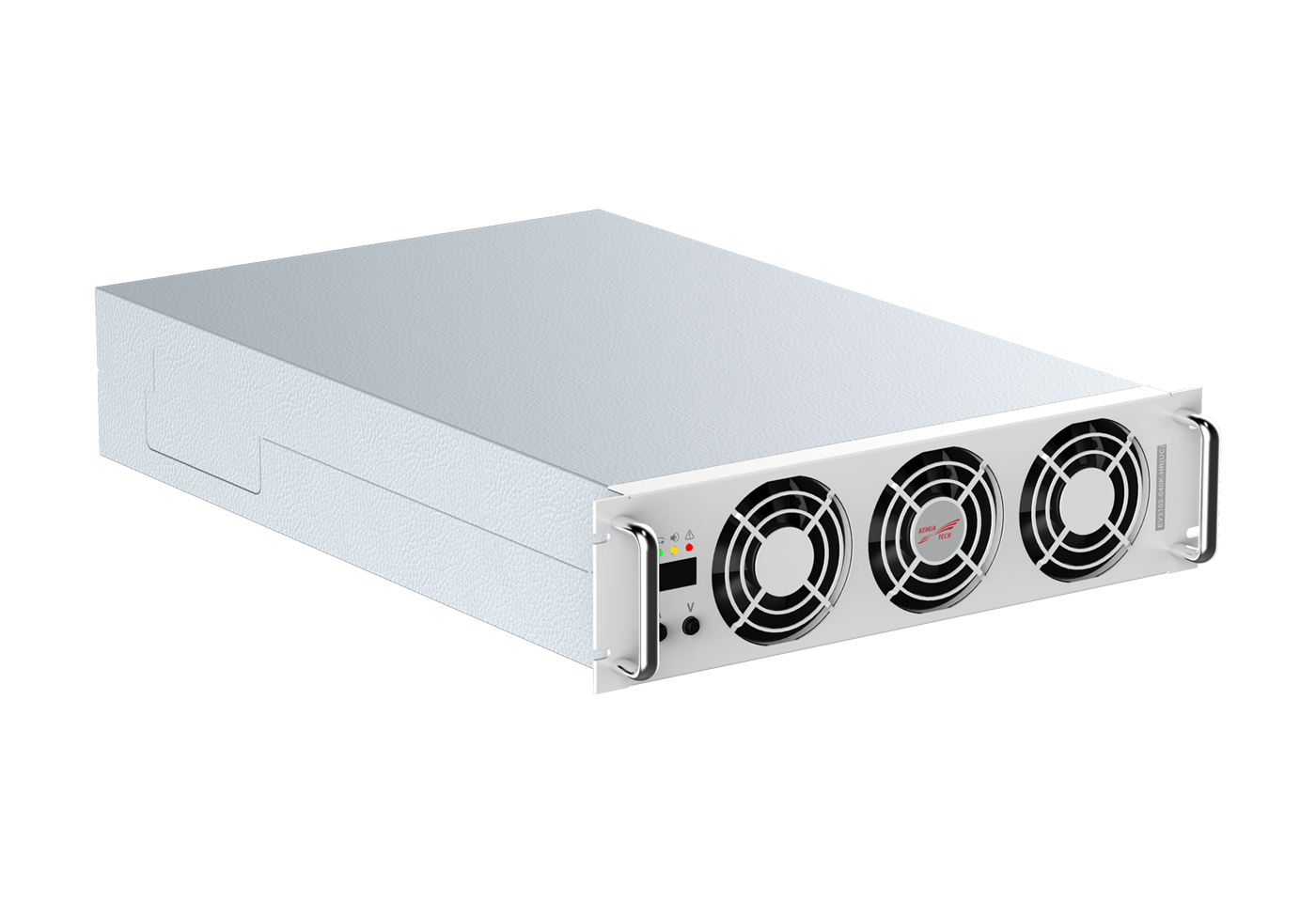
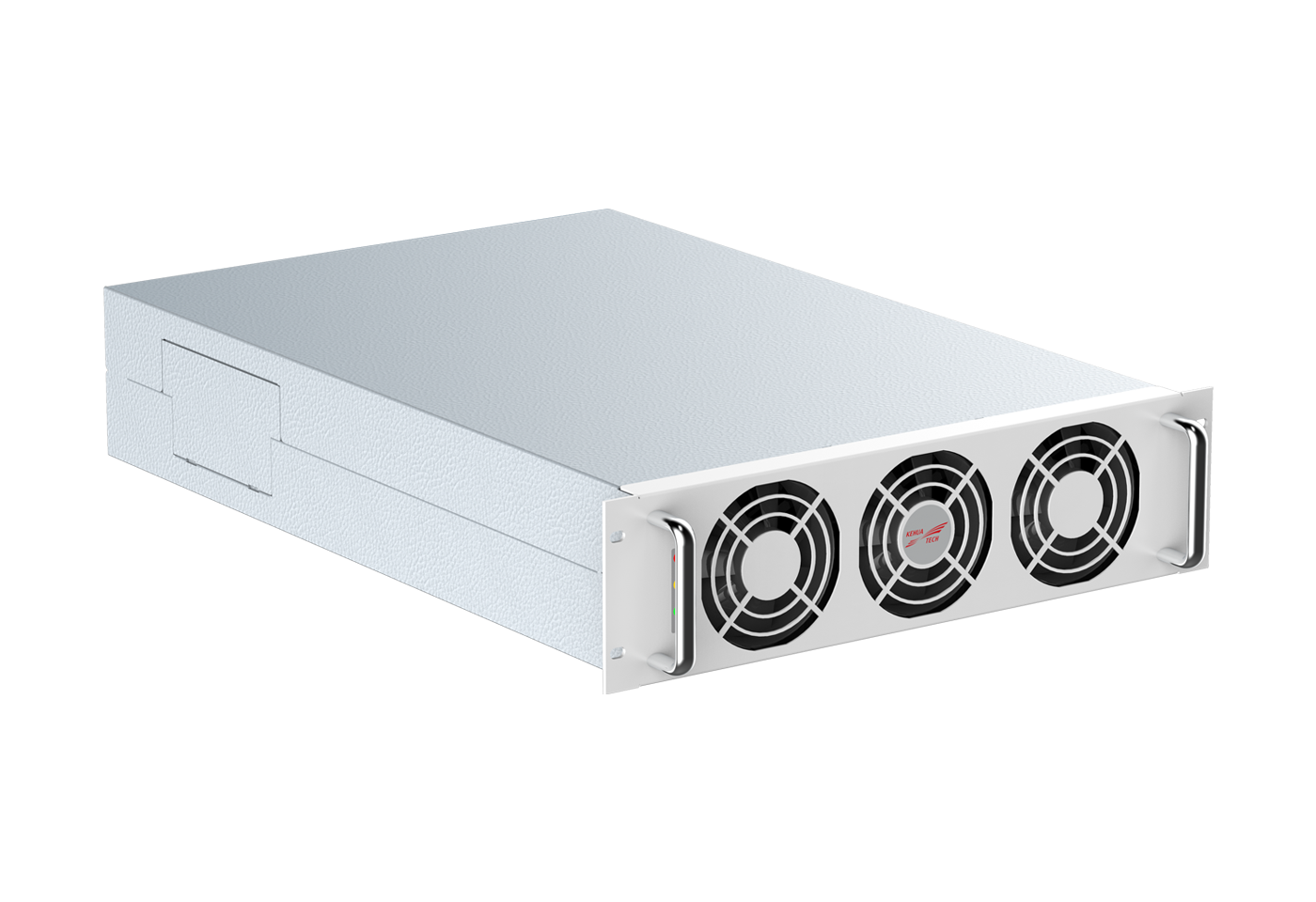
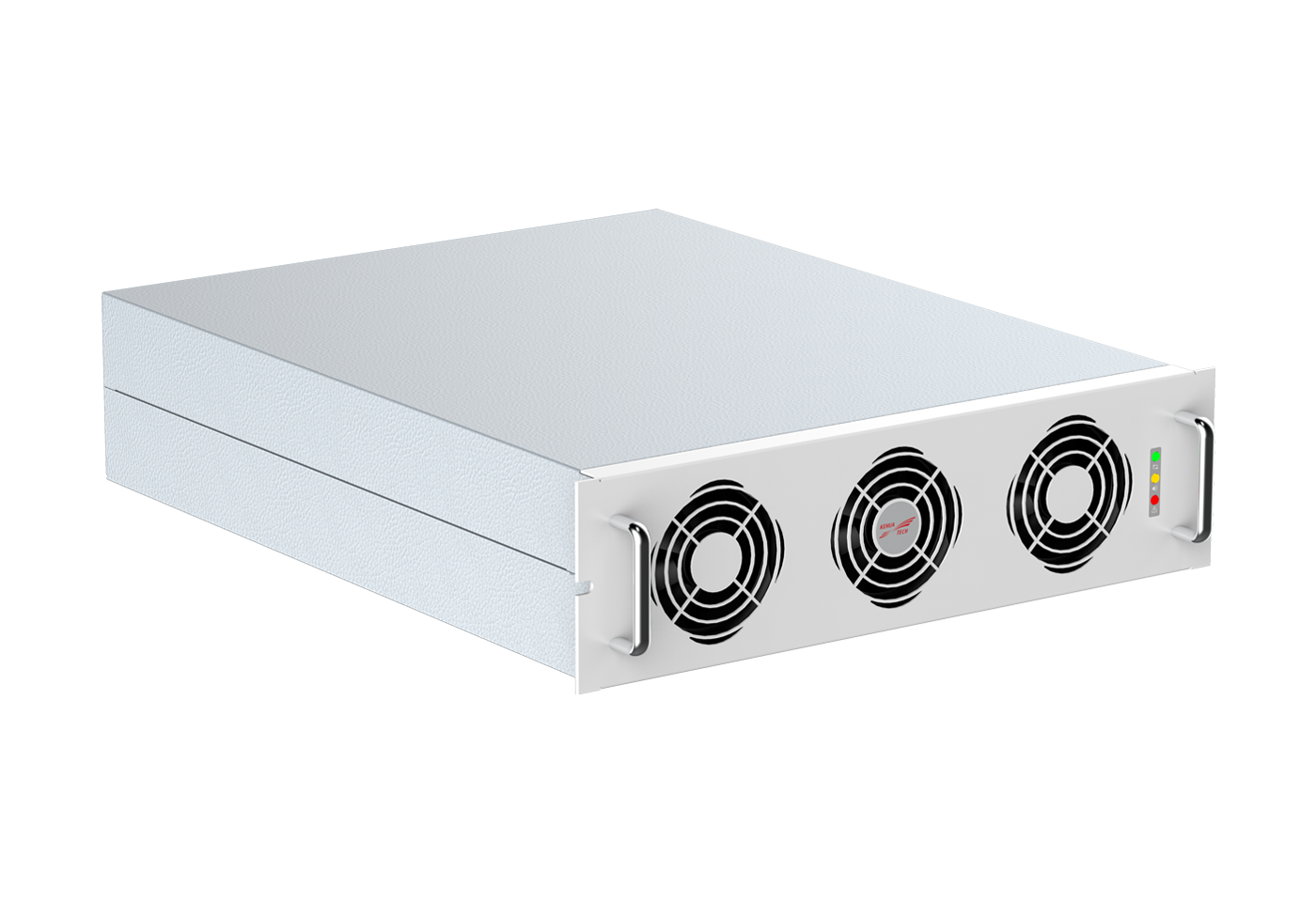
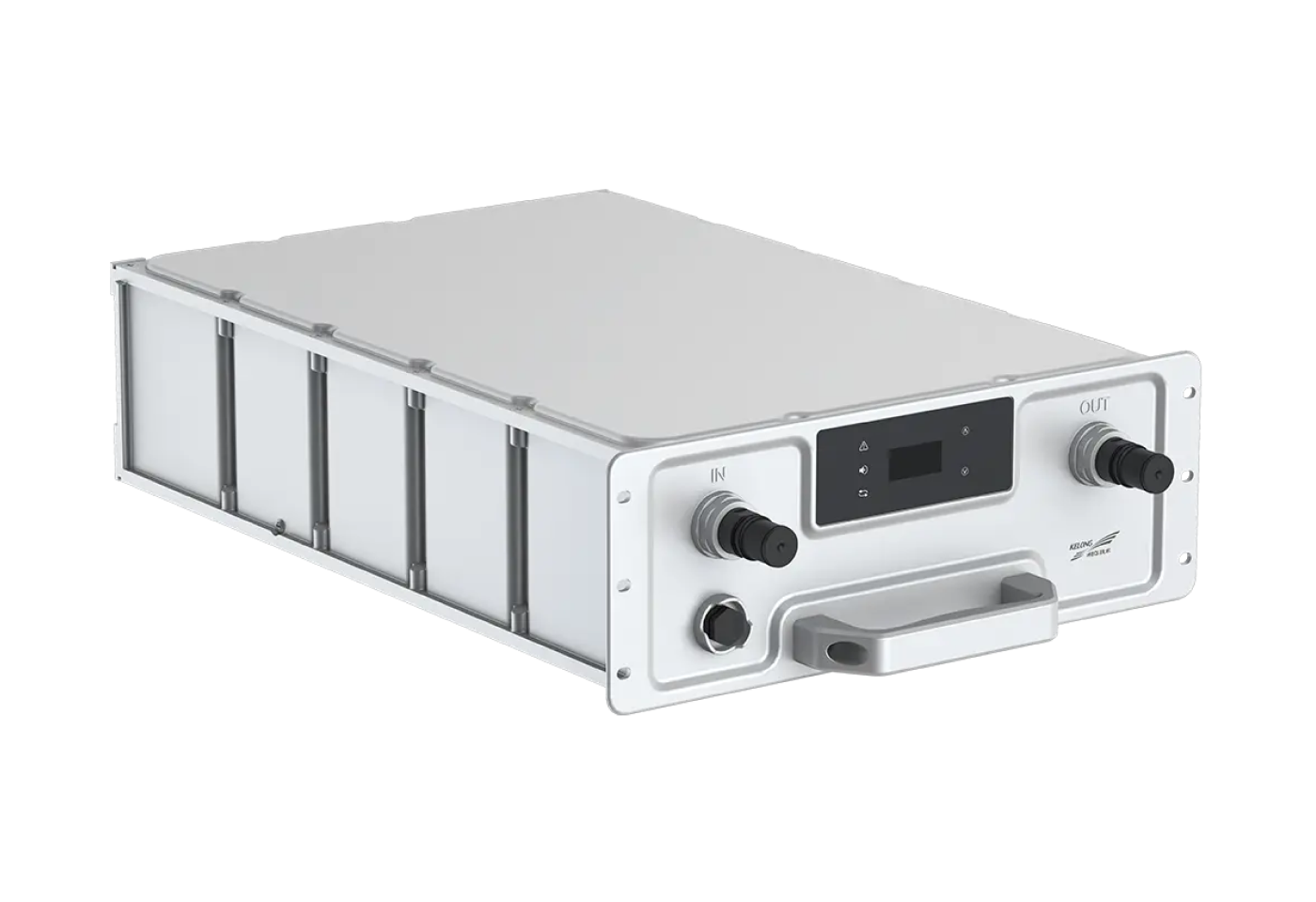
Kehua's high‑power DC charging modules, including award‑winning 40 kW SiC modules, are specifically engineered for such modular expansion and high‑efficiency power conversion. [thesmartere-award]
Flexible Site Layout and UX
Because satellite dispensers are compact and cabinet‑free, rest stop owners have more freedom in site design, improving both traffic flow and driver experience. [kempower]
- Drive‑through lanes for buses and trucks.
- Accessible bays with better cable reach for different vehicle types.
- Cleaner aesthetics, which reinforces a premium brand and safety perception.
As uptime and overall experience become key KPIs in 2026 and beyond, this flexibility is not just cosmetic—it supports smoother operations and higher driver satisfaction. [greencars]
Faster Deployment and Lower Life‑Cycle Costs
Industry analyses show that scalable power distribution architectures can dramatically reduce trenching, conduit and heavy electrical work compared with traditional radial wiring. These savings are especially important at highway sites where civil works and grid upgrades are expensive and disruptive. [dot.ca]
Operators benefit from:
1. Shorter construction schedules, allowing faster opening of new charging hubs.
2. Lower initial capex per bay when considering total system and civil works.
3. Reduced maintenance costs, as most electronics are centralized in a sheltered, serviceable space. [en.kehuasz]
Future‑Proofing Highway Sites with High‑Power and Megawatt Charging
By 2030, highways will see more next‑generation EVs, heavy‑duty trucks and e‑buses requiring very high charging power. Ultra‑fast chargers above 350 kW and emerging megawatt charging systems (MCS) will become essential for logistics corridors and intercity bus operations. [cyberswitching]
Why High‑Power DC and MCS Matter
- Heavy‑duty vehicles need to take on large amounts of energy during mandated rest breaks.
- Fleet operators running time‑sensitive routes cannot afford multi‑hour charging sessions.
- Consumer expectations shift as new battery chemistries and solid‑state technologies enable shorter charging times. [driivz]
For rest stop owners, this means designing sites now that can accommodate these future loads without a complete redesign.
Shenzhen Kehua Hengsheng offers high‑power distributed systems and megawatt‑class charging solutions that integrate with both existing DC fast chargers and future MCS standards, enabling operators to phase in higher power levels as the vehicle mix evolves. [en.kehuasz]
V2G‑Ready and PV + Storage: Turning Rest Stops into Energy Assets
Highway rest stops are not just power consumers; with the right technology, they can become active participants in the energy ecosystem. [cyberswitching]
Vehicle‑to‑Grid (V2G) and Bi‑Directional Charging
V2G technology allows EVs to discharge power back to the grid or to on‑site loads, turning parked vehicles into distributed energy resources. This is particularly attractive for: [driivz]
- Fleets using highway rest areas on predictable schedules.
- Grid operators needing fast‑responding resources for peak shaving or frequency support.
- CPOs looking for new revenue streams beyond kWh sales. [cyberswitching]
From 2025 to 2030, industry observers expect bi‑directional charging to play a central role in improving energy resilience and monetizing EV flexibility. Distributed architectures are naturally suited to implement V2G because power aggregation is already centralized in shared cabinets. [kempower]
PV + Energy Storage Integration
Pairing highway charging sites with photovoltaic (PV) generation and battery energy storage systems (BESS) delivers multiple operational benefits. [verdek]
- Peak shaving: Reduce demand charges by using stored energy during high‑load periods.
- Resilience: Maintain limited charging service during grid disturbances or outages.
- Sustainability: Lower the carbon intensity of kWh delivered, aligning with ESG goals.
For remote or weak‑grid locations, containerized off‑grid or hybrid solutions are already being deployed on highways and travel plazas, combining PV, storage and fast charging in a pre‑integrated package. [verdek]
Kehua offers integrated PV + storage + charging systems, allowing operators to deploy a cohesive solution from a single expert provider instead of stitching together multiple vendors. [en.kehuasz]
Real‑World Design Insights from Highway Charging Projects
Drawing on practical project work and industry research, several best practices consistently emerge for highway distributed charging deployments. [pecnw]
Right‑Sizing Power and Connectors
When planning a rest stop with a distributed system, we typically recommend:
1. Start with realistic utilization assumptions based on local traffic studies and EV adoption forecasts. [dot.ca]
2. Design for mixed use cases: passenger cars, ride‑hailing, light commercial vans and, where relevant, buses or trucks.
3. Combine different power levels: e.g., several 300–350 kW bays and a larger number of 150–200 kW bays, all fed from shared power cabinets. [driivz]
Distributed architecture makes it much easier to adjust this mix later, compared with static, stand‑alone High Power Chargers (HPCs). [chargedevs]
Planning for Reliability and Maintainability
From an operator's standpoint, uptime and serviceability are non‑negotiable. [greencars]
- Centralizing power electronics in protected cabinets simplifies maintenance access. [chargedevs]
- Modular DC charging modules can be swapped quickly, reducing downtime per bay.
- Integrated monitoring and remote diagnostics help operators resolve issues before they affect users. [cyberswitching]
Kehua's long track record in critical power and UPS systems informs the robustness and redundancy designed into its EV charging solutions, including fault‑tolerant module configurations and industrial‑grade components. [thesmartere-award]
How Shenzhen Kehua Hengsheng Enables Distributed Highway Charging
Company Expertise and Product Portfolio
Founded in 2001 and backed by more than 37 years of power electronics experience from Kehua Group, Shenzhen Kehua Hengsheng is recognized as a reliable EV charging equipment provider serving global customers. [thesmartere-award]
Its EV charging portfolio covers the full stack needed for modern highway rest stop deployments: [en.kehuasz]
- DC charging modules and cabinets for distributed systems.
- AC chargers for longer‑stay or staff parking.
- DC fast chargers for passenger vehicles and light commercial fleets.
- High‑power distributed systems for large charging hubs.
- Megawatt‑class charging systems targeting heavy‑duty transportation.
- V2G bidirectional technology to enable grid‑interactive charging.
- Integrated PV + energy storage + charging systems for on‑site renewables and resilience.
The company's 40 kW SiC high‑efficiency high‑power charging module has received international recognition, winning a 2025 "E‑Mobility" award, which underscores its technical leadership in high‑efficiency DC conversion. [thesmartere-award]
Why Highway Operators and CPOs Choose Distributed Solutions from Kehua
From discussions with operators and feedback from site engineers, the most commonly cited reasons for choosing a distributed architecture from an established provider include: [kempower]
- Confidence in long‑term scalability as traffic and EV penetration grow.
- Reduced total cost of ownership thanks to optimized power distribution and minimal rework during expansions.
- Simplified maintenance and lifecycle management, leveraging modular modules and remote diagnostics.
- Vendor stability and domain expertise in high‑reliability power systems.
For CPOs and infrastructure investors, these factors translate into better risk management and stronger business cases over a 10‑ to 15‑year horizon.
Practical Implementation Steps for Highway Rest Stop Owners
For rest stop owners and operators evaluating an upgrade or new build, the following step‑by‑step approach often works best. [pecnw]
Step‑by‑Step Roadmap
1. Assess demand and use cases
- Analyze traffic volumes, EV penetration, local fleet activity and nearby competition.
- Consider future policy changes and OEM product roadmaps that may accelerate EV growth. [dot.ca]
2. Define the long‑term vision
- Decide how many bays you might need in 5–10 years, not just in year one.
- Plan for high‑power and potential megawatt charging if heavy‑duty traffic is relevant. [sepapower]
3. Select a distributed architecture and power block size
- Work with an experienced provider such as Shenzhen Kehua Hengsheng to size central cabinets, DC modules and satellite dispensers. [chargedevs]
- Design cable routes, cabinet locations and service access with future expansion in mind.
4. Integrate PV, storage and V2G readiness
- Evaluate rooftop, carport or nearby land for PV installation.
- Size a battery system to manage peaks and enhance resilience.
- Ensure chargers and control systems are V2G‑ready where regulations and business models allow. [verdek]
5. Optimize the user experience (UX)
- Provide clear signage, intuitive HMI, transparent pricing and reliable 24/7 support. [greencars]
- Design bays to accommodate different vehicle sizes without awkward parking manoeuvres.
6. Monitor, iterate and scale
- Track utilization, dwell time and customer feedback.
- Add modules and dispensers as throughput increases, leveraging the distributed architecture's scalability. [kempower]
At‑a‑Glance Comparison: Distributed vs Traditional Highway Charging
| Aspect | Distributed Charging System | Traditional Stand‑Alone Chargers |
|---|---|---|
| Scalability | Modular; add dispensers and modules with minimal civil work (chargedevs) | Limited; expansion often requires new cabinets and trenching (chargedevs) |
| Capex over lifecycle | Lower when including civil works and upgrades (chargedevs) | Higher due to duplicated infrastructure (chargedevs) |
| Layout flexibility | Very flexible; slim dispensers, better traffic flow (kempower) | Bulkier units constrain bay design |
| High‑power and MCS ready | Well suited to central high‑power blocks (kempower) | More complex to scale to megawatt levels |
| V2G and smart energy | Centralized control simplifies integration (kempower) | Fragmented control per unit |
| Maintenance | Centralized electronics, faster module replacement (chargedevs) | Dispersed electronics, more field visits |
| Best suited for highways | Large multi‑bay rest stops and travel hubs (kempower) | Small sites with only a few fast chargers |
Conclusion: Building Highway Rest Stops for the Next Decade of EV Growth
Highway rest stops are on the front lines of the EV transition, and the decisions operators make today will determine how resilient, profitable and user‑friendly their sites are in 5–10 years. [mazdausa]
Distributed EV charging systems offer a clear scalability advantage: they enable modular expansion, support high‑power and megawatt charging, integrate naturally with PV, storage and V2G, and deliver superior uptime and user experience compared with traditional layouts. [verdek]
With a proven portfolio that includes DC modules, DC fast chargers, high‑power distributed systems, megawatt solutions, V2G‑ready technology and integrated PV + storage, Shenzhen Kehua Hengsheng is well positioned to help highway rest stop operators and CPOs design, deploy and scale next‑generation charging hubs worldwide. [thesmartere-award]
If you are planning a new corridor site or upgrading existing rest stops, now is the time to evaluate a distributed architecture and partner with an experienced technology provider to future‑proof your infrastructure.
If you operate highway rest areas, service plazas or travel centers and want to scale EV charging efficiently, consider partnering with Shenzhen Kehua Hengsheng to design a distributed, high‑power, V2G‑ready charging system tailored to your corridor. Our team can support you from feasibility study to turnkey deployment and long‑term optimization. [en.kehuasz]
FAQs: Distributed EV Charging for Highway Rest Stops
1. What is the main advantage of distributed charging systems for highways?
The main advantage is scalability: you can easily add more dispensers and power capacity over time without extensive civil works or full system replacement. [chargedevs]
2. Are distributed systems only suitable for very large rest stops?
No. While they shine at large hubs, distributed architectures also benefit medium‑sized sites that expect usage growth, mixed vehicle types or future high‑power and V2G applications. [kempower]
3. How do distributed systems improve user experience for drivers?
They enable cleaner layouts, more intuitive traffic flow, shorter queues thanks to smart power sharing, and higher uptime through centralized, easier‑to‑maintain power cabinets. [greencars]
4. Can distributed highway charging integrate with renewables and storage?
Yes. Centralized power cabinets and energy management systems make it straightforward to connect PV arrays, battery storage and V2G functionality, turning sites into smart energy hubs. [sepapower]
5. Why choose Shenzhen Kehua Hengsheng for distributed highway charging projects?
Because Kehua combines decades of power electronics experience with a complete EV charging portfolio—DC modules, fast chargers, distributed systems, MCS, V2G and PV + storage—plus award‑winning high‑efficiency technology and global project expertise. [thesmartere-award]
References
1. Starline / industry whitepaper on scalable EVSE deployment and flexible power distribution. Available at: https://chargedevs.com/whitepapers/fleets/solving-evse-deployment-and-scalability-challenges-with-flexible-power-distribution/ [chargedevs]
2. Kempower, "Distributed Charging Systems." Available at: https://kempower.com/solution/distributed-charging-systems/ [kempower]
3. Caltrans, "Utilizing Highway Rest Areas for Electric Vehicle Charging." Available at: https://dot.ca.gov/-/media/dot-media/programs/research-innovation-system-information/documents/final-reports/task-3389-finalreport-a11y.pdf [dot.ca]
4. Verdek, "Off‑Grid & Highway EV Charging Infrastructure." Available at: https://verdek.com/industries/off-grid-highway [verdek]
5. Mazda USA, "What Is the Future of EV Charging?" Available at: https://www.mazdausa.com/resource-center/future-of-ev-charging [mazdausa]
6. SEPA, "EV Charging Infrastructure: Trends, Requirements & Costs." Available at: https://sepapower.org/knowledge/ev-charging-infrastructure/ [sepapower]
7. Cyberswitching, "The Future of Charging Infrastructure: Trends 2025–2030." Available at: https://cyberswitching.com/the-future-of-charging-infrastructure-trends-2025-2030/ [cyberswitching]
8. Driivz, "2026 EV Charging Industry Predictions and Trends." Available at: https://driivz.com/blog/2026-ev-charging-industry-predictions-and-trends/ [driivz]
9. GreenCars, "The State of EV Charging in 2026: What's Improving and What Still Needs Work." Available at: https://www.greencars.com/news/the-state-of-ev-charging-in-2026-whats-improving-and-what-still-needs-work [greencars]
10. PEC, "How To Create an EV Charging Station Location Strategy." Available at: https://www.pecnw.com/blog/how-to-create-an-ev-charging-station-location-strategy/ [pecnw]
11. Shenzhen Kehua Hengsheng Technology Co., Ltd., "Reliable EV Charging Equipment Provider – Company Profile." Available at: https://en.kehuasz.com/eu/company-profile.html [en.kehuasz]
12. The smarter E AWARD 2025, "40kW SiC High‑Efficiency High‑Power Charging Module by Shenzhen Kehua Hengsheng Technology." Available at: https://www.thesmartere-award.com/hall-of-fame/thesmartere-award-winners-2025/shenzhen-kehua-hengsheng [thesmartere-award]
13. Versinetic, "EV Charging Infrastructure 2026 Trends: What to Expect." Available at: https://www.versinetic.com/news-blog/ev-charging-infrastructure-2026-trends/ [versinetic]
Hot Tags: Distributed Charging Systems, Manufacturers, Customized, Custom, Suppliers, Buy, Cheap, Quality, Advanced, Durable, in Stock, Free Sample, Made in China, Price, Quotation

