



- Electric Bus Charging Upgraded: Fast & Flexible
- Shenzhen Kehua’s 40 kW High-Efficiency SiC Charging Module Achieves CE, CB, and UL Certifications
- Shenzhen Kehua Unveils High-Reliability All-in-One DC Charger for the ASEAN Market
- Shenzhen Kehua’s Scalable Megawatt Power Unit: Pioneering the Next Era of High-Power Charging for Green Mobility
- Growth Opportunities in the EV Charging Industry Amid the Global Transportation Electrification
- The Future of Fleet Charging: Building Efficient and Reliable Charging Infrastructure
The Green Factory: Integrating PV + Energy Storage with High-Power Distributed Systems


Content Menu
● Executive Overview: Why PV + Energy Storage + High‑Power Charging Matters
● From Stand‑Alone Solar to Integrated Green Factories
● Core Components of a Green Factory Energy System
>> PV generation as the green backbone
>> Liquid‑cooled ESS as the flexible buffer
>> High‑power distributed DC and megawatt charging
● PV‑ESS‑Charging Solutions: Addressing Real‑World Pain Points
>> Challenge 1: Weak flexibility and fragmented systems
>> Challenge 2: Reliability and safety in harsh environments
● Intelligent EMS and V2G: The Brain of the Green Factory
>> V2G bidirectional charging and intelligent testing
● Community Charging: Extending Green Factory Value to Surroundings
● Step‑by‑Step Roadmap: How to Build a Green Factory with PV‑ESS‑Charging
>> Step 1: Define energy and fleet strategy
>> Step 2: Design the integrated architecture
>> Step 3: Choose proven, self‑developed integrated products
>> Step 4: Implement intelligent EMS and O&M
>> Step 5: Iterate based on data
● Why Kehua's PV‑ESS‑Charging Architecture Stands Out
● Call to Action: Turn Your Plant into a Green Factory
● Frequently Asked Questions (FAQ)
Executive Overview: Why PV + Energy Storage + High‑Power Charging Matters
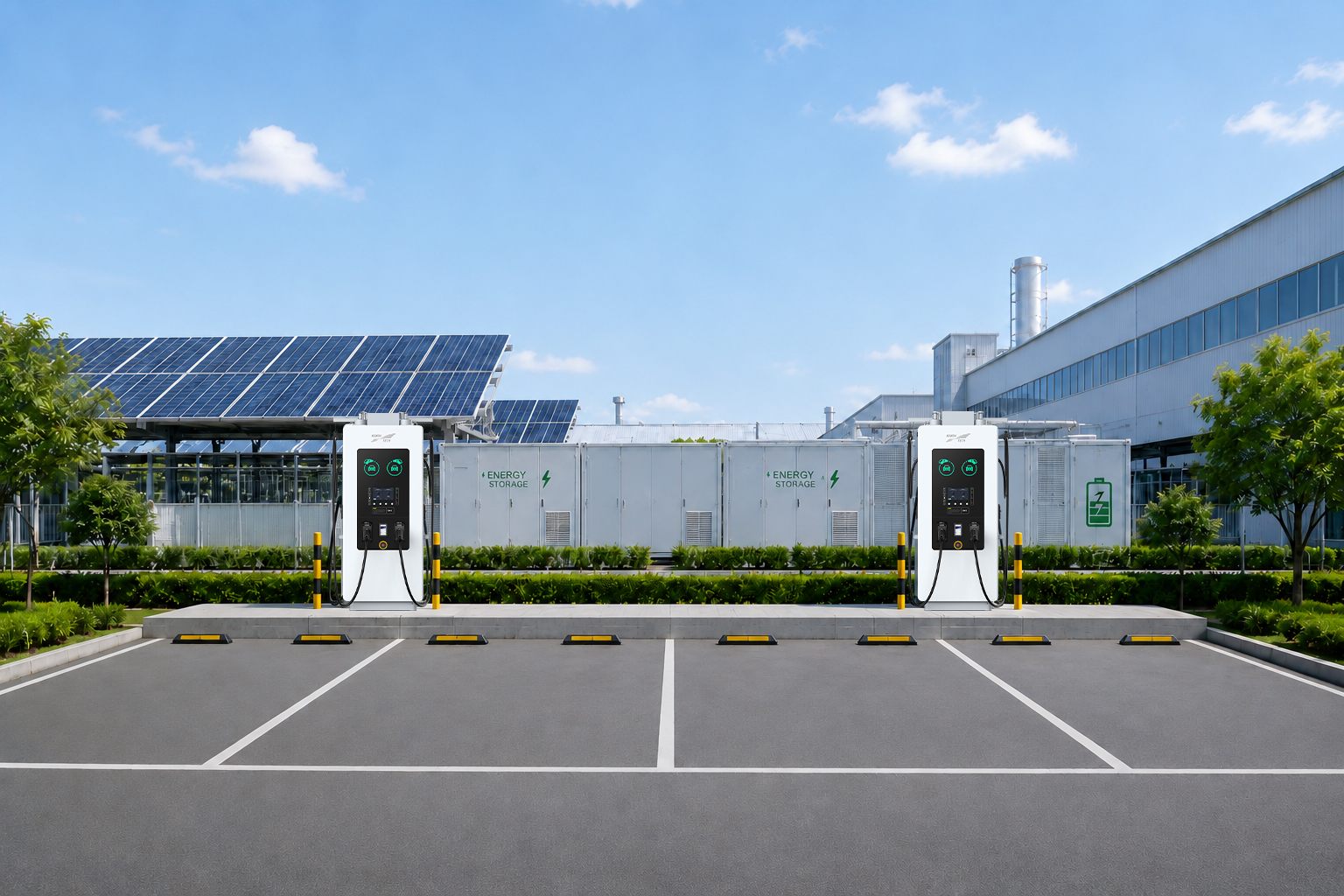
In the last few years, I have watched factories, logistics hubs and commercial parks move from "pilot solar projects" to fully integrated PV + energy storage + high‑power EV charging systems as part of their core energy strategy. This shift is no longer experimental; it is now a proven, bankable way to reduce electricity costs, decarbonize operations and support large‑scale electrification of fleets. [ pv-magazine-usa ]
From my work with Shenzhen Kehua Hengsheng Technology Co., Ltd. (hereafter " Kehua "), a global provider of EV charging modules , AC chargers, DC fast chargers , megawatt‑level charging systems, V2G bidirectional technology and PV‑ESS‑Charging solutions , I have seen how an integrated architecture can turn an ordinary plant into a truly green factory . [ nisonco ]
In essence, a green factory today:
- Generates clean power on‑site through photovoltaics (PV) .
- Stores surplus energy in advanced energy storage systems (ESS) .
- Delivers this power to high‑power distributed EV charging for fleets, employees and visitors.
- Uses intelligent EMS and V2G to optimize costs, reliability and grid interaction. [ moz ]
From Stand‑Alone Solar to Integrated Green Factories
Traditional factories often start with stand‑alone rooftop PV feeding directly into their internal load or the grid. While this reduces daytime consumption, it does not solve peak demand at night, nor does it support the fast‑growing need for ultra‑fast EV charging . [ inspenet ]
By contrast, integrated PV + ESS + high‑power EV charging systems (often called PV‑ESS‑Charging ) are designed from day one to balance generation, storage, and high‑power load. [ nisonco ]
Key characteristics of an integrated green factory:
- PV power sized for both process loads and EV charging.
- Liquid‑cooled ESS to shift energy from low‑price to peak periods and to soak up excess PV production. [ professionalparaplanner.co ]
- High‑power distributed DC charging (including megawatt‑level systems) for fleets, logistics trucks and buses.
- Smart EMS providing omni‑link power allocation and intelligent scheduling , dynamically coordinating PV, ESS, grid and chargers. [ nisonco ]
This holistic approach is now viewed as a mainstream configuration in industrial applications because it reduces conversion losses, stabilizes the grid and supports higher renewable penetration. [ pv-magazine-usa ]
Core Components of a Green Factory Energy System
PV generation as the green backbone
On the generation side, rooftop, carport and ground‑mounted PV systems provide zero‑fuel‑cost energy during the day. Factories increasingly oversize PV capacity to cover: [ inspenet ]
- Base process loads.
- HVAC and cooling loads.
- Daytime EV charging of employee vehicles and light fleet .
When paired with ESS, this PV output is no longer constrained by mid‑day demand: surplus energy is stored instead of curtailed, then dispatched during the evening factory peak or overnight fleet charging. [ professionalparaplanner.co ]
Liquid‑cooled ESS as the flexible buffer
A liquid‑cooled energy storage system is the heart of the modern green factory, providing both technical flexibility and commercial value. [ professionalparaplanner.co ]
In practical terms, ESS enables factories to:
- Charge when energy is cheap or abundant (high PV output, off‑peak grid tariffs).
- Discharge when tariffs spike or when high‑power charging might otherwise overload the connection. [ pv-magazine-usa ]
- Provide backup power and improve power quality for sensitive equipment.
Kehua's ESS platforms use precise thermal management and active safety control , with liquid cooling enabling stable operation even in harsh environments, an essential factor for composite energy stations. [ nisonco ]
High‑power distributed DC and megawatt charging
As heavy‑duty fleets electrify, we are moving beyond 7–22 kW AC posts to DC fast charging , high‑power distributed systems and megawatt‑level chargers . [ pv-magazine-usa ]
Kehua's product portfolio in this segment includes: [ moz ]
- DC charging modules and DC fast chargers for cars and light commercial vehicles.
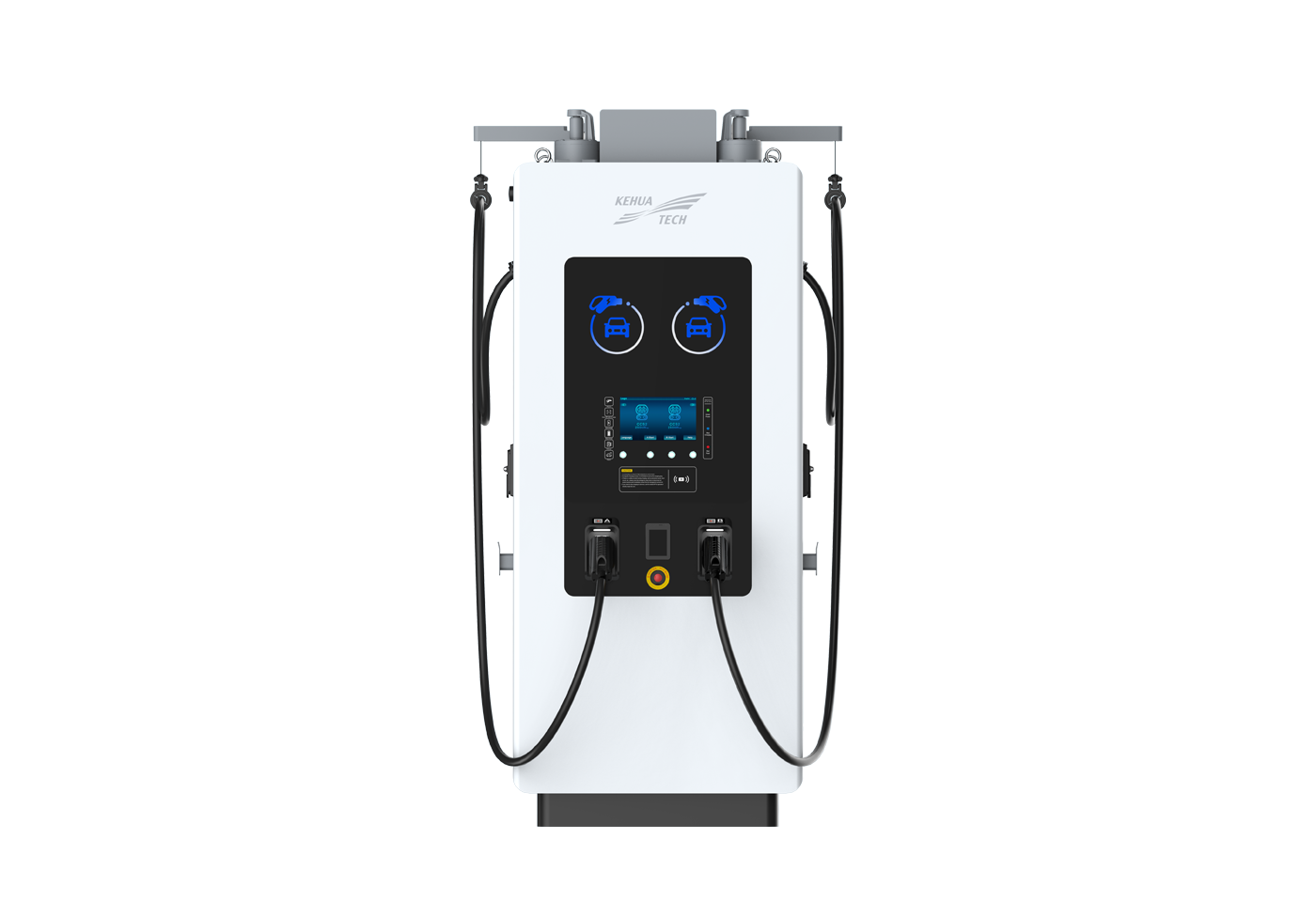
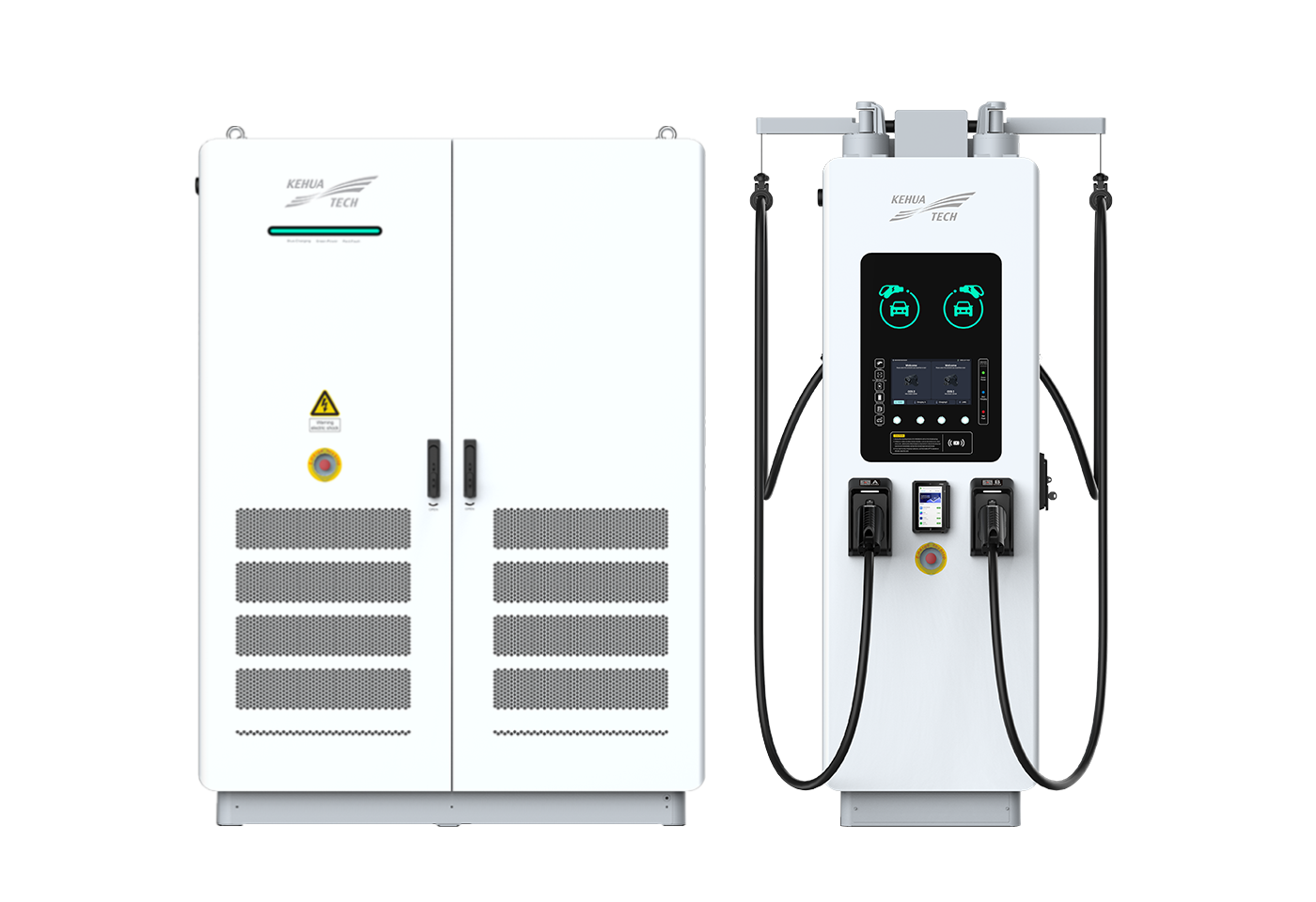
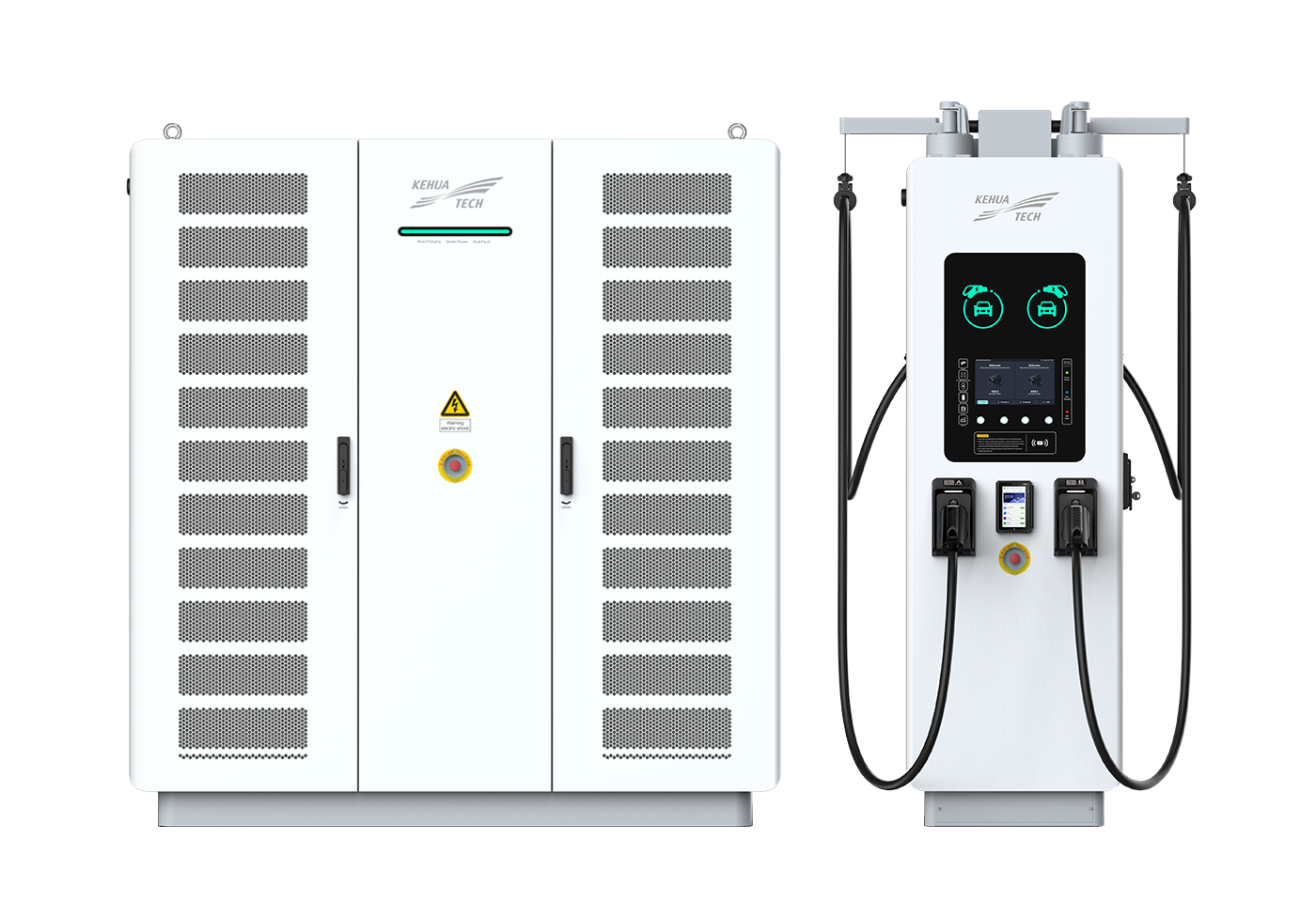
- High‑power distributed systems with centralized power conversion and distributed dispensers.
- Megawatt‑class charging for heavy trucks and buses.
These systems are designed to be tightly integrated with PV and ESS, enabling ultra‑high‑power charging reliability while avoiding onerous and slow grid expansion. [ nisonco ]
PV‑ESS‑Charging Solutions: Addressing Real‑World Pain Points
Based on numerous deployments, several recurring challenges emerge for industrial and commercial customers considering green factory projects. [ nisonco ]
Challenge 1: Weak flexibility and fragmented systems
Many sites start with third‑party PV, another vendor's ESS, and yet another supplier for chargers. This leads to:
- Poor interoperability and limited combo solution adaptability.
- Difficulty ensuring that green power crosses transformer boundaries for local consumption.
Kehua's self‑developed PV + ESS + charging product lines are designed to work together as a single solution, increasing system flexibility and simplifying project delivery. [ nisonco ]
Challenge 2: Reliability and safety in harsh environments
Industrial sites can face dust, heat, humidity and fluctuating loads. ESS instability or charger failures are unacceptable in a 24/7 production environment. [ professionalparaplanner.co ]
To address this, Kehua's PV‑ESS‑Charging solution focuses on:
- Liquid‑cooled ESS with active safety control and precise temperature management. [ nisonco ]
- Over 100 protection measures on charging systems , providing comprehensive safety for people, vehicles and equipment. [ nisonco ]
- Robust composite energy station charge/discharge reliability, even under high cycling and demanding duty cycles. [ nisonco ]
Intelligent V2G: The Brain of the Green Factory
One of the most underestimated assets of a green factory is the software intelligence layer . In my experience, plants that treat V2G as "add‑ons" rather than core design elements leave a significant amount of value on the table. [ wellows ]
V2G bidirectional charging and intelligent testing
Vehicle‑to‑grid ( V2G ) is no longer a theoretical concept; it is being piloted at real fleets and substations. V2G modules and solutions integrate PV, ESS, EV charging, discharging and intelligent inspection into a single architecture. [ moz ]
Practical V2G benefits the green factory can unlock:
- Peak shaving by discharging EV batteries during plant peaks.
- Grid support and ancillary services , where regulations allow.
- Intelligent battery testing , enabling the operator to assess EV battery health while vehicles are connected. [ moz ]
These capabilities were showcased at major events such as the China PV, Energy Storage and Charging & Community Charging Industry Conference.
Community Charging: Extending Green Factory Value to Surroundings
Kehua provides robust, high-efficiency EV charging solutions designed to extend green energy benefits beyond industrial and enterprise boundaries into residential, commercial, and public community settings.
Key Features and Capabilities
Kehua's charging systems for community and public environments are engineered for reliability, safety, and operational efficiency:
1. Robust Performance: Systems feature intelligent power optimization and high peak efficiency (≥96.5% for various power units), ensuring fast and reliable charging.
2. Comprehensive Safety: Hardware designs are built with 40+ levels of protection to ensure user and equipment safety during large-scale, continuous operation.
3. Flexible Deployment: Solutions are adaptable for various environments, ranging from city and highway public stations to residential or commercial fleet charging.
4. Advanced Technology: Systems incorporate features such as dual-cable simultaneous charging, smart power allocation, and modular, scalable architectures (ranging from integrated DC chargers to high-power distributed systems).
Step‑by‑Step Roadmap: How to Build a Green Factory with PV‑ESS‑Charging
From my perspective working with industrial clients, successful green factory projects typically follow a structured roadmap.
Step 1: Define energy and fleet strategy
1. Map current electricity consumption , power quality issues and tariff structure.
2. Assess current and future EV fleet size , duty cycles and required charging power.
3. Clarify corporate carbon reduction and ESG targets .
Step 2: Design the integrated architecture
- Size PV to optimize rooftop, carport and ground‑mount potential.
- Dimension ESS for both economic arbitrage and operational resilience.
- Select AC/DC chargers, DC fast chargers and megawatt‑level systems according to fleet profile.
- Plan EMS, cloud platform and V2G functionalities from day one. [ moz ]
Step 3: Choose proven, self‑developed integrated products
Selecting an integrated solution provider like Kehua reduces interface risk and accelerates deployment: [ nisonco ]
- Self‑developed PV + ESS + charging product lines ensure high compatibility.
- Standardized containerized designs shorten construction periods.
- Rich project experience in cities like Shanghai, Shenzhen, Zhuhai, Xiamen and Wuhan de‑risks new deployments. [ moz ]
Step 4: Implement intelligent EMS and O&M
- Deploy the self‑developed EMS with omni‑link power allocation.
- Set clear rules for peak shaving, valley filling, and PV priority dispatch .
- Use remote O&M and OTA to resolve most issues without site visits. [ nisonco ]
Step 5: Iterate based on data
- Continuously analyze energy and charging data to refine schedules.
- Add or adjust chargers as fleet composition changes.
- Explore new revenue streams such as participation in local ancillary services markets where regulations allow. [ professionalparaplanner.co ]
Why Kehua's PV‑ESS‑Charging Architecture Stands Out
From an industry practitioner's viewpoint, several attributes make Kehua's PV‑ESS‑Charging solution particularly suitable for green factories:
- End‑to‑end integration : All key elements—PV, ESS, chargers are self‑developed and designed to work together, reducing project complexity and commissioning risk. [ moz ]
- Proven in diverse scenarios : Deployed in urban super charging stations , industrial parks and residential communities across multiple major Chinese cities. [ moz ]
- Advanced safety and reliability : Liquid‑cooled ESS and 60–100+ protection measures minimize operational risks in harsh industrial environments. [ moz ]
- Intelligent operation : Remote O&M and OTA update capabilities keep systems efficient and up‑to‑date with minimal human intervention. [ nisonco ]
For operators who need a scalable pathway from pilot to portfolio‑wide deployment , this integrated approach significantly accelerates time‑to‑value.
Call to Action: Turn Your Plant into a Green Factory
If your factory, logistics center or commercial park is preparing for large‑scale EV adoption and facing rising electricity costs, the time to design a PV‑ESS‑Charging‑based green factory is now.
Shenzhen Kehua Hengsheng Technology Co., Ltd. can support you with:
- Technical consulting and solution design for PV + ESS + high‑power charging.
- Proven reference architectures and project experience.
- End‑to‑end products, including DC charging modules, AC chargers, DC fast chargers, high‑power distributed systems, megawatt‑level chargers, V2G modules and PV‑ESS‑Charging solutions . [ moz ]
To explore how a tailored PV‑ESS‑Charging solution can support your decarbonization and electrification roadmap, you can reach the Kehua team directly via info@kehuasz.com or the contact form on their official website. [ nisonco ]
Frequently Asked Questions (FAQ)
1. What is the main benefit of integrating PV, ESS and high‑power EV charging in a factory?
The main benefit is a stable, low‑carbon and cost‑optimized energy system that can support large‑scale EV charging without overloading the grid, while also cutting electricity bills through peak shaving and PV self‑consumption. [ inspenet ]
2. Do I need to upgrade my grid connection to install high‑power chargers?
Not necessarily. By combining ESS and intelligent EMS , factories can often avoid or defer major grid upgrades, using storage and scheduling to manage peak loads and ensure ultra‑high‑power charging reliability . [ pv-magazine-usa ]
3. How does liquid‑cooled ESS improve safety and lifetime?
Liquid cooling enables precise thermal management , keeping battery cells within optimal temperature ranges, which enhances safety, performance and cycle life, especially in harsh industrial environments. [ professionalparaplanner.co ]
4. Is V2G already commercially viable for factories?
V2G is emerging, with pilot projects demonstrating value in peak shaving, grid support and intelligent battery diagnostics , but its full commercial use depends on local regulation and market rules. [ pv-magazine-usa ]
5. How quickly can a PV‑ESS‑Charging project be deployed?
Timeline depends on scale and permitting, but standardized, containerized designs and self‑developed product lines allow for rapid deployment , especially when leveraging reference designs from previous Kehua projects. [ moz ]
References
1. Shenzhen Kehua – PV‑ESS‑Charging Solution (system architecture, features, Guangxi urban super charging station case)
https://en.kehuasz.com/global/PV-ESS-Charging-Solutions.html [ nisonco ]
2. Shenzhen Kehua – V2G PV, Energy Storage, Charging and Community Charging Solutions (V2G functionality, community charging deployments, safety measures)
https://en.kehuasz.com/xwjj/info_252_itemid_1019.html [ moz ]
3. PV Magazine USA – Five trends defining the U.S. energy storage revolution (solar‑plus‑storage mainstreaming, utility‑scale trends)
https://pv-magazine-usa.com/2026/03/11/five-data-points-defining-the-u-s-energy-storage-revolution/ [ pv-magazine-usa ]
4. Inspenet – Solar power with batteries: Optimizing the energy balance (hybrid PV‑storage configurations, DC‑coupled advantages)
https://inspenet.com/en/articles/solar-power-and-battery-integration/ [ inspenet ]
5. Professional Paraplanner – Battery storage: An investment case study (role of storage in integrating renewables and enhancing grid stability)
https://professionalparaplanner.co.uk/battery-storage-an-investment-case-study/ [ professionalparaplanner.co ]
6. Innovation Visual – Google's EEAT Guidelines – How To Remain Compliant (topical authority, accuracy, expert sourcing)
https://www.innovationvisual.com/knowledge-hub/resources/google-eeat-guidelines-how-to-remain-compliant [ innovationvisual ]
7. Wellows – E‑E‑A‑T Checklist for SEO (content quality, schema markup and author authority)
https://wellows.com/blog/e-e-a-t-checklist/ [ wellows ]
Hot Tags: High-Power Distributed Systems, Manufacturers, Customized, Custom, Suppliers, Buy, Cheap, Quality, Advanced, Durable, in Stock, Free Sample, Made in China, Price, Quotation

