



- Electric Bus Charging Upgraded: Fast & Flexible
- Shenzhen Kehua’s 40 kW High-Efficiency SiC Charging Module Achieves CE, CB, and UL Certifications
- Shenzhen Kehua Unveils High-Reliability All-in-One DC Charger for the ASEAN Market
- Shenzhen Kehua’s Scalable Megawatt Power Unit: Pioneering the Next Era of High-Power Charging for Green Mobility
- Growth Opportunities in the EV Charging Industry Amid the Global Transportation Electrification
- The Future of Fleet Charging: Building Efficient and Reliable Charging Infrastructure
The Future of Petrol Stations: Transitioning to Energy Hubs with DC Fast Chargers


Content Menu
● Why Petrol Stations Are Ideal EV Energy Hubs
● The Strategic Role of DC Fast Chargers in the Transition
>> What Makes DC Fast Charging Essential?
>> Connector Standards and Compatibility
● From Fuel Forecourts to Smart Energy Hubs
>> Clean Energy + Storage + Digitalization
● A Practical Transition Roadmap for Petrol Station Operators
>> Step 1 – Market and Site Assessment
>> Step 2 – Select the Right DC Charging Architecture
>> Step 3 – Integrate PV, Storage and Smart Management
>> Step 4 – Build a Digital, User‑Centric Charging Experience
● Business Models and Revenue Opportunities
>> Direct‑to‑Consumer Fast Charging
>> Partnerships and White‑Label Solutions
>> Grid Services and Energy Trading
● User Experience and Station Design: What Really Matters to EV Drivers
● Example Layout – Petrol Station to Energy Hub (Concept Table)
● Recommendations for Operators Planning Their Next Move
● FAQs: The Future of Petrol Stations and DC Fast Charging
Petrol stations are at a strategic crossroads. The rise of electric vehicles (EVs), grid decarbonization, and changing driver expectations are turning traditional forecourts into multi‑energy, digitalized hubs where DC fast charging plays the central role. [chargeduppro]
For operators, the key question is no longer if they should integrate EV charging, but how fast they can deploy the right mix of DC fast chargers, high‑power distributed systems, V2G bidirectional technology, and solar‑plus‑storage to future‑proof their business model. [evconnect]
Why Petrol Stations Are Ideal EV Energy Hubs
From an operator's perspective, petrol stations already have the foundations of a high‑value EV charging destination. They combine roadside visibility, high traffic flow, 24/7 access, restrooms, convenience retail, and proven operating know‑how for high‑turnover refueling. [ok2charge]
As public DC fast charging networks expand, a growing share of fast chargers is being installed at travel centers, convenience stores, and fuel‑adjacent retail, precisely because these locations match EV driver needs: safe, well‑lit, easy to reach, and with services on site. [afdc.energy]
From my experience working with retailers and energy operators, three advantages stand out:
- Existing forecourt infrastructure – grid connections, traffic flows and zoning are already in place. [chargeduppro]
- Trusted consumer brand – drivers already associate these sites with refueling and refreshments. [chargeduppro]
- Operational excellence – staff, processes and safety standards can be extended to EV charging. [chargeduppro]
By adding DC fast charging, energy storage and intelligent software, the familiar petrol station can be upgraded into a multi‑energy forecourt that serves both combustion and electric vehicles during a long transition period. [chargedevs]
The Strategic Role of DC Fast Chargers in the Transition
What Makes DC Fast Charging Essential?
Direct‑current (DC) fast charging equipment enables rapid charging along major traffic corridors at power outputs up to 500 kW, often referred to as Level 3 charging. In practice, this means that compatible vehicles can add substantial range in the time it takes to grab a coffee and use the restroom. [afdc.energy]
According to U.S. Alternative Fuels Data Center data, over 20% of public EV charging ports in the United States are already DC fast chargers, and this share is expected to rise as more long‑distance and high‑throughput locations are electrified. [afdc.energy]
For petrol stations, DC fast chargers:
- Create a familiar "refuel‑like" experience, keeping dwell times commercially attractive. [evb]
- Increase revenue per parking bay by serving more vehicles per day compared with slower chargers. [afdc.energy]
- Unlock premium services such as reserved high‑power bays, fleet contracts and loyalty programs. [pdf.dfcfw]
Connector Standards and Compatibility
Most modern EVs support CCS (Combined Charging System), which allows the same port to be used for AC Level 1, AC Level 2 and DC fast charging, with extra pins on the DC connector. Other systems such as CHAdeMO and emerging J3400 standards still coexist in the market. [afdc.energy]
For station owners, this is why modular DC charging solutions that support multiple standards and can be upgraded over time are commercially safer. Shenzhen Kehua Hengsheng Technology Co., Ltd. addresses this through flexible DC charging modules, high‑power distributed systems and megawatt‑class charging systems that can evolve with vehicle technology and local demand. [afdc.energy]
From Fuel Forecourts to Smart Energy Hubs
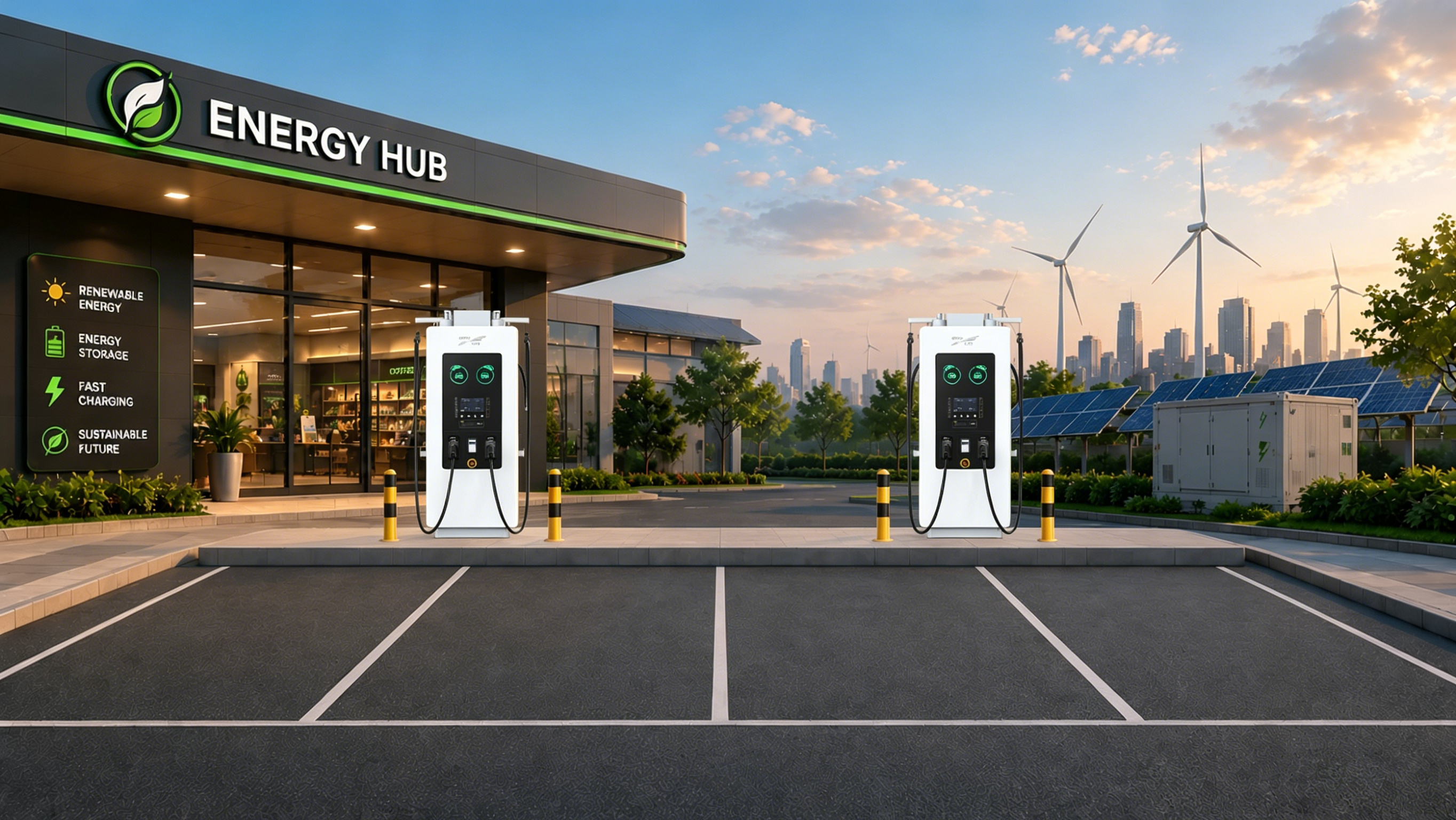
The most forward‑looking operators are not just adding chargers; they are re‑architecting their sites as integrated energy hubs. [sinopecnews.com]
Clean Energy + Storage + Digitalization
Industry data and case studies show that successful energy hubs increasingly combine: [sinopecnews.com]
- High‑power DC fast charging for passenger cars, fleets and future heavy‑duty EVs. [chargedevs]
- On‑site solar PV generation to cut operating costs and reduce carbon intensity. [evb]
- Battery energy storage systems (BESS) to buffer the grid, support peak shaving and provide backup. [chargedevs]
- Smart energy management platforms that orchestrate chargers, PV, storage and grid interaction. [sinopecnews.com]
Chinese and international energy companies are already emphasizing that traditional fuel businesses must "go digital‑intelligent" (数智化) to manage multi‑energy integration, user operations and precise load control. [sinopecnews.com]
A Practical Transition Roadmap for Petrol Station Operators
From my work advising forecourt operators and energy retailers, successful projects typically follow a staged approach rather than a single "big bang" upgrade. Below is a simplified four‑step roadmap for transitioning a petrol station into a DC fast charging energy hub.
Step 1 – Market and Site Assessment
1. Analyze local EV penetration and growth projections using national statistics, utility data, and OEM forecasts. [papers.ssrn]
2. Map competing charging infrastructure within a defined catchment radius to identify gaps in power level, pricing or service quality. [evb]
3. Evaluate grid connection capacity and upgrade options with the local utility, including potential incentives for fast charging and distributed energy resources. [chargedevs]
4. Understand user archetypes – commuters, long‑distance travelers, fleets, taxis or ride‑hailing drivers – because each group has different dwell times and charging needs. [pdf.dfcfw]
Step 2 – Select the Right DC Charging Architecture
Based on the assessment, petrol stations can define a scalable baseline:
- Core DC fast charging modules (e.g., 60–180 kW per dispenser) to serve everyday passenger EVs. [afdc.energy]
- High‑power distributed systems (e.g., 350–600 kW shared cabinets) for sites with highway or fleet traffic. [evb]
- Megawatt‑class charging capacity reserved for future heavy‑duty vehicles, bus depots or logistics hubs integrated with the site. [papers.ssrn]
Step 3 – Integrate PV, Storage and Smart Management
To protect margins in an increasingly competitive charging market, operators should plan early for energy optimization:
- Install solar PV on canopies, rooftops or adjacent land to generate low‑carbon electricity on site. [sinopecnews.com]
- Add battery storage sized for both fast‑charging peaks and demand charge management. [chargeduppro]
- Implement an energy management system (EMS) that coordinates grid imports, PV generation, storage, and charging load in real time. [chargedevs]
Step 4 – Build a Digital, User‑Centric Charging Experience
Modern EV drivers expect more than just a cable. They look for a seamless digital experience with: [pdf.dfcfw]
- Real‑time charger availability and navigation in apps.
- Transparent, predictable pricing and payment options.
- Reliable uptime and clear on‑site wayfinding.
User‑centric operators build their own or white‑label platforms that unify station discovery, booking, charging sessions, and loyalty rewards—and they use data from these platforms to deepen customer insights. [pdf.dfcfw]
In China, for example, best‑practice operators are already using data platforms to define service standards, create user profiles, match users to optimal stations, and continuously refine offers based on usage and feedback. [sinopecnews.com]
By aligning EV charging UX with existing fuel and retail experiences, petrol stations can grow both kilowatt‑hour sales and in‑store revenue as drivers spend 15–30 minutes on site. [pdf.dfcfw]
Business Models and Revenue Opportunities
Direct‑to‑Consumer Fast Charging
Operators can run own‑brand fast charging as a core business:
- Per‑kWh tariffs with flexible time‑of‑day pricing. [evb]
- Membership tiers for frequent users, taxis or fleet accounts. [chargeduppro]
- Bundled offers linking charging credits with shop discounts or car‑wash services. [evb]
This resembles the existing fuel model but with higher emphasis on loyalty and stay‑time monetization. [pdf.dfcfw]
Partnerships and White‑Label Solutions
Many travel retailers are now partnering with dedicated EV charging networks to co‑develop infrastructure, sharing CAPEX and OPEX while leveraging scalable back‑end platforms. [electrek]
For example, integrated DC fast charging systems that plug into existing payment and service infrastructure at fuel retailers have been launched, enabling petrol station operators to manage EV charging through familiar tools. [electrek]
Turnkey DC fast charging systems and modular power electronics are well suited for such partnerships, providing the hardware backbone while operators or partners supply branding and front‑end services.
Grid Services and Energy Trading
With storage and V2G‑enabled chargers, petrol stations can participate in: [evconnect]
- Peak‑shaving programs and demand‑response schemes.
- Capacity markets or local flexibility markets where available.
- On‑site backup and micro‑grid operations during grid disturbances.
Emerging platforms already use cloud‑based engines to optimize charging schedules, predict demand, and orchestrate grid services to maximize revenue for site hosts. This aligns perfectly with the capabilities of digital energy management solutions and bidirectional power systems. [chargedevs]
User Experience and Station Design: What Really Matters to EV Drivers
From an EV driver's perspective—especially those sharing candid feedback online—three UX dimensions are consistently mentioned:
1. Reliability: Chargers must work, every time, with minimal errors. [ok2charge]
2. Clarity: Signage, pricing and status information must be obvious and easy to understand. [sinopecnews.com]
3. Comfort: Drivers want safe, sheltered, well‑lit spaces with access to restrooms, Wi‑Fi, snacks and seating. [ok2charge]
To address this, petrol stations should:
- Use bold, intuitive wayfinding and painted lanes leading to EV bays. [sinopecnews.com]
- Provide weather‑protected canopies for both chargers and users. [chargeduppro]
- Integrate real‑time status displays, showing power levels, estimated time and price per kWh. [pdf.dfcfw]
Technology Spotlight – How Kehua Hengsheng Supports the Transition
Shenzhen Kehua Hengsheng Technology Co., Ltd. positions itself as a reliable, end‑to‑end EV charging solution provider for global customers, with a portfolio that naturally aligns with petrol station transformation needs.
Key technology pillars include:
- DC Charging Modules and DC Fast Chargers
- High‑efficiency, modular DC power stacks that scale from low to ultra‑high power.
- Support for mainstream connector standards and evolving market requirements. [afdc.energy]
- AC Chargers for Longer Dwell Use‑Cases
- Ideal for staff parking, overnight fleet use or adjacent commercial properties.
- High‑Power Distributed and Megawatt‑Level Charging Systems
- Centralized power cabinets feeding multiple satellites, optimized for utilization and CAPEX control. [papers.ssrn]
- Ready for future heavy‑duty vehicle corridors, bus stations and logistics hubs connected to existing petrol sites.
- Integrated PV + Storage + Charging Systems
- Single‑vendor solutions that combine solar, batteries and charging, simplifying engineering and operations. [chargedevs]
By integrating these elements into a unified energy and operations platform, Kehua Hengsheng helps operators reduce project complexity, accelerate deployment and maintain long‑term flexibility.
Example Layout – Petrol Station to Energy Hub (Concept Table)
The table below summarizes how a conventional petrol station can evolve into a smart energy hub using DC fast charging and Kehua Hengsheng‑style integrated systems.
| Site Element | Conventional Petrol Station | Future Energy Hub with DC Fast Charging |
|---|---|---|
| Primary energy | Liquid fuels | Liquid fuels + electricity (DC fast + AC) |
| Charging/Refueling time | 3–5 minutes | 10–30 minutes typical DC fast session (afdc.energy) |
| Core equipment | Fuel pumps, tanks, POS | DC fast chargers, high‑power cabinets, PV, storage (chargeduppro) |
| Grid interaction | One‑way consumption | Dynamic import/export, grid services participation (evconnect) |
| Digital experience | Basic fuel payment and loyalty | Apps, navigation, reservations, real‑time status, dynamic pricing (sinopecnews.com) |
| Revenue drivers | Fuel margin + store sales | Energy sales + store sales + grid services + data‑driven offers (chargeduppro) |
Recommendations for Operators Planning Their Next Move
Based on current market data and real‑world deployments, my recommendations for petrol station decision‑makers are: [electrek]
- Start with a scalable DC fast charging backbone, not just one or two token chargers.
- Design for multi‑energy from day one, reserving space and grid capacity for PV, storage and future megawatt systems.
- Invest early in digital platforms for user engagement, analytics and operational control.
- Explore partnerships with technology providers that can deliver integrated solutions rather than fragmented components.
- Plan for V2G and grid services, even if these are activated in later phases, to keep your site future‑proof.
With the right strategy, petrol station operators can convert today's disruption into a powerful growth opportunity, securing their role at the heart of tomorrow's clean, intelligent mobility ecosystem.
FAQs: The Future of Petrol Stations and DC Fast Charging
Q1: Why should petrol stations invest in DC fast chargers instead of only slower AC chargers?
DC fast chargers deliver much higher power, enabling rapid charging along busy corridors and making short‑dwell commercial models viable, whereas AC chargers mainly suit long‑stay locations. [ok2charge]
Q2: How many DC fast chargers does a typical mid‑size station need initially?
Many operators start with a small cluster (for example 4–8 fast charging bays) and scale up as utilization grows, using modular DC systems to add power without redesigning the whole site. [evb]
Q3: Is V2G technology ready for commercial deployment at service stations?
V2G is already being piloted and commercialized in multiple markets, with bidirectional chargers and control software enabling energy to flow from EV batteries back to the grid or site loads. [emporiaenergy]
Q4: How can operators keep charging profitable with volatile electricity prices?
By combining PV, storage, dynamic tariffs and smart EMS, sites can shift consumption, store energy when it is cheap, and use or export it when prices are higher, improving margins. [chargeduppro]
References
1. EVB, "The Future of Gas Stations: Sustain Profitability with EV Charging," 2025. [https://www.evb.com/future-of-gas-stations/] [evb]
2. Charged Up Pro, "Gas Stations Position Themselves for EV Growth through Clean Energy Hub Partnerships," 2026. [https://chargeduppro.com/post/gas-stations-position-themselves-for-ev-growth-through-clean-energy-hub-partnerships] [chargeduppro]
3. U.S. Department of Energy, Alternative Fuels Data Center, "Electric Vehicle Charging Stations – DC Fast Charging Overview." [https://afdc.energy.gov/fuels/electricity-stations] [afdc.energy]
4. Sinopec News, "加油站发展充电业务必须走数智化之路," 2024. [http://www.sinopecnews.com.cn/xnews/content/2024-04/12/content_7092921.html] [sinopecnews.com]
5. ElectricFish Energy, "ElectricFish targets gas stations for its Turbo Charge EV charging platform," 2026. [https://chargedevs.com/newswire/electricfish-targets-gas-stations-for-its-turbo-charge-ev-charging-platform/] [chargedevs]
6. Gilbarco Veeder‑Root launches Konect DC fast charging system. Electrek, 2024. [https://electrek.co/2024/05/14/dc-fast-charging-gas-stations/] [electrek]
7. EV Connect, "What Is Vehicle‑to‑Grid (V2G) Technology and How Does It Work?" 2025. [https://www.evconnect.com/blog/what-is-vehicle-to-grid-v2g-technology-and-how-does-it-work/] [evconnect]
8. Virta, "Vehicle‑to‑Grid (V2G): Everything you need to know," 2025. [https://www.virta.global/vehicle-to-grid-v2g] [virta]
9. Emporia Energy, "What is V2G? A Guide to Vehicle‑to‑Grid Technology," 2026. [https://www.emporiaenergy.com/blog/what-is-v2g/] [emporiaenergy]
10. OK2Charge, "Gas Stations & EV Chargers — Why All The Tension?" 2021. [https://www.ok2charge.com/blog/news/3w5tykvb9fb23s2r0fqbzmqroh7yye] [ok2charge]
11. 头豹研究院, "2024年汽车充电桩头豹词条报告系列," 2024. [https://pdf.dfcfw.com/pdf/H3_AP202501081641860298_1.pdf] [pdf.dfcfw]
Hot Tags: DC Fast Chargers, Manufacturers, Customized, Custom, Suppliers, Buy, Cheap, Quality, Advanced, Durable, in Stock, Free Sample, Made in China, Price, Quotation

