



- Electric Bus Charging Upgraded: Fast & Flexible
- Shenzhen Kehua’s 40 kW High-Efficiency SiC Charging Module Achieves CE, CB, and UL Certifications
- Shenzhen Kehua Unveils High-Reliability All-in-One DC Charger for the ASEAN Market
- Shenzhen Kehua’s Scalable Megawatt Power Unit: Pioneering the Next Era of High-Power Charging for Green Mobility
- Growth Opportunities in the EV Charging Industry Amid the Global Transportation Electrification
- The Future of Fleet Charging: Building Efficient and Reliable Charging Infrastructure
Integrated DC Charger vs. Distributed Charging System: Which Scalability Model Fits Your 2026 Fleet Plan?


Content Menu
● Understanding Your Two Scalability Models
>> What is an Integrated DC Charger?
>> What is a Distributed Charging System?
● Architecture at a Glance: Integrated vs. Distributed
>> Design and Infrastructure Differences
>> Key Pros and Cons for Fleet Operators
● Scalability for Your 2026 Fleet Plan
>> How Fast Is Your Fleet Growing?
>> Scalability Model Comparison Table
● TCO and ROI: Budgeting Beyond CAPEX
>> Total Cost of Ownership Considerations
>> Example: Medium vs. Large Fleet ROI
● Reliability, Maintenance, and Uptime
>> Failure Modes and Redundancy
>> Operations and Maintenance (O&M) Strategy
● Grid, PV, and Energy Storage Integration
>> Why DC‑Linked PV+Storage Matters in 2026
>> Which Architecture Integrates Better?
● Expert View: How to Choose for Your 2026 Plan
>> A Practical Decision Framework
>> Where Shenzhen Kehua Fits In
● Five Actionable Steps to Select Your Scalability Model
>> Step 1 – Map today's and 2026 fleet profiles
>> Step 2 – Audit grid connection and energy costs
>> Step 3 – Select base architecture per site
>> Step 4 – Layer in PV+storage and microgrid‑ready capabilities
>> Step 5 – Standardize hardware and software platforms
● CTA: Align Your 2026 Fleet Plan with Future‑Ready Infrastructure
● FAQ: Integrated DC Charger vs. Distributed Charging System
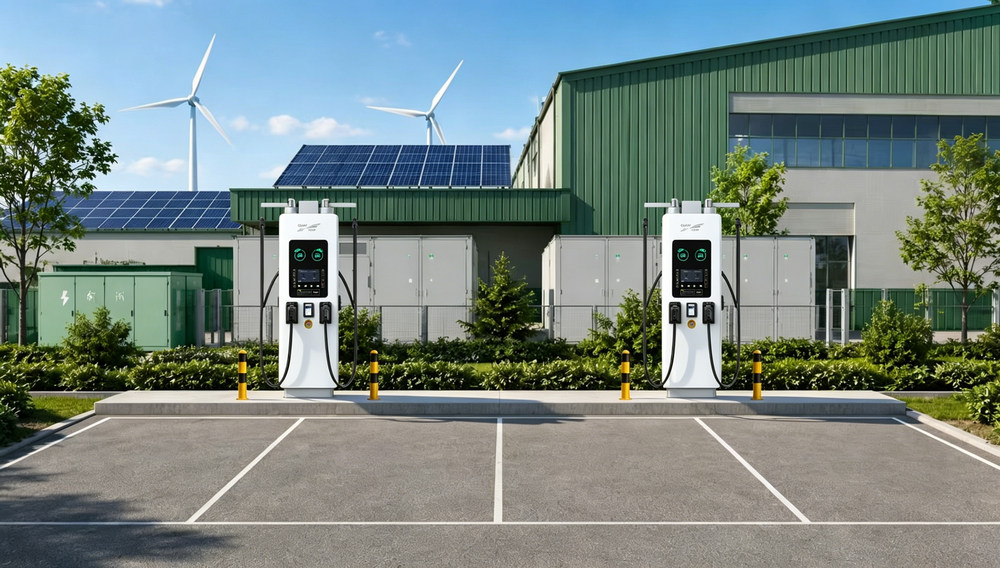
Integrated DC chargers and distributed charging systems each offer compelling benefits, but the right scalability model for your 2026 fleet plan depends on your load profile, site constraints, and long‑term expansion roadmap. As a fleet and infrastructure partner, Shenzhen Kehua Hengsheng Technology Co., Ltd. can help you blend both architectures with DC modules , high‑power distributed systems , and PV+storage‑ready solutions to optimize total cost of ownership and grid impact.
Understanding Your Two Scalability Models
What is an Integrated DC Charger?
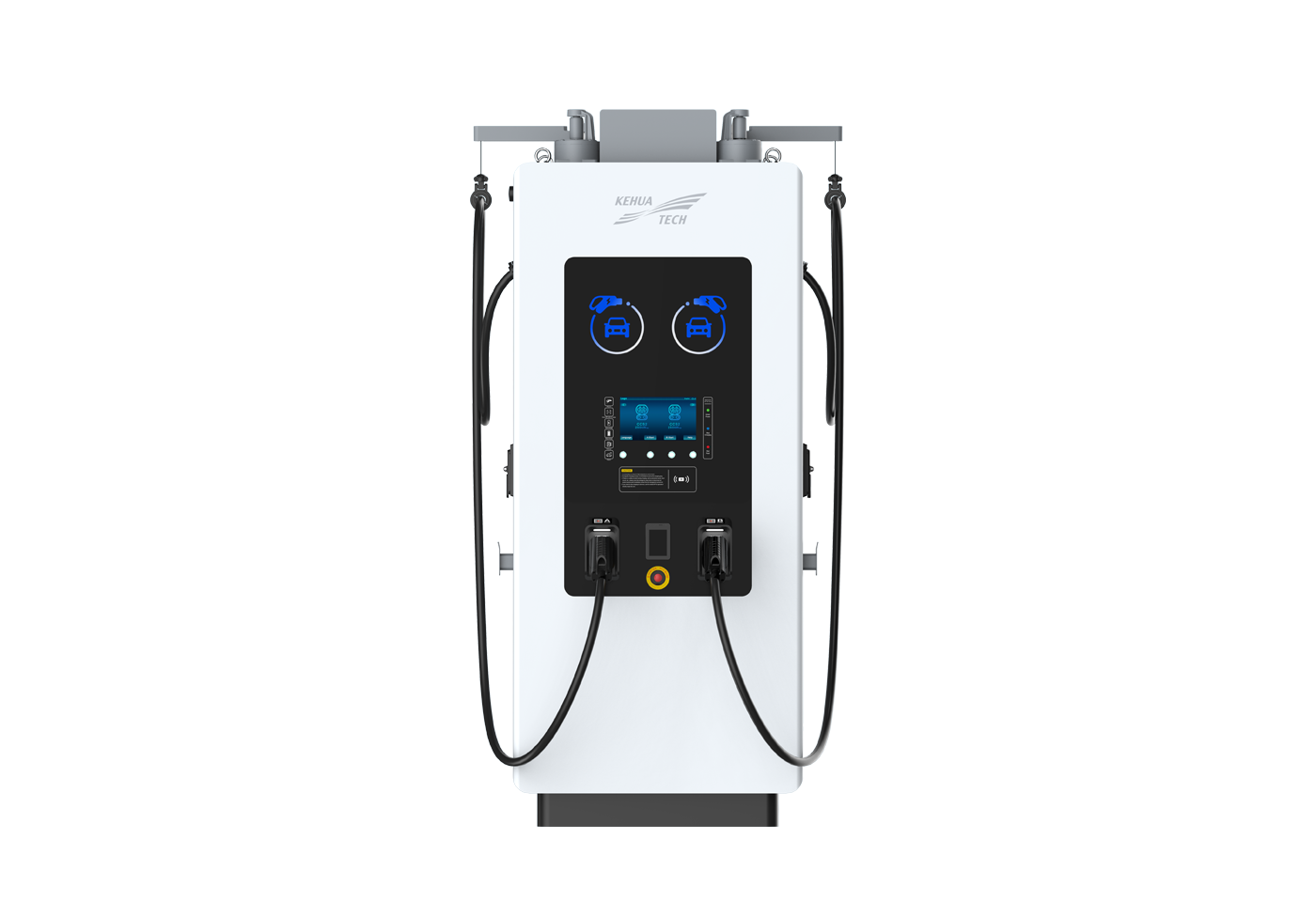
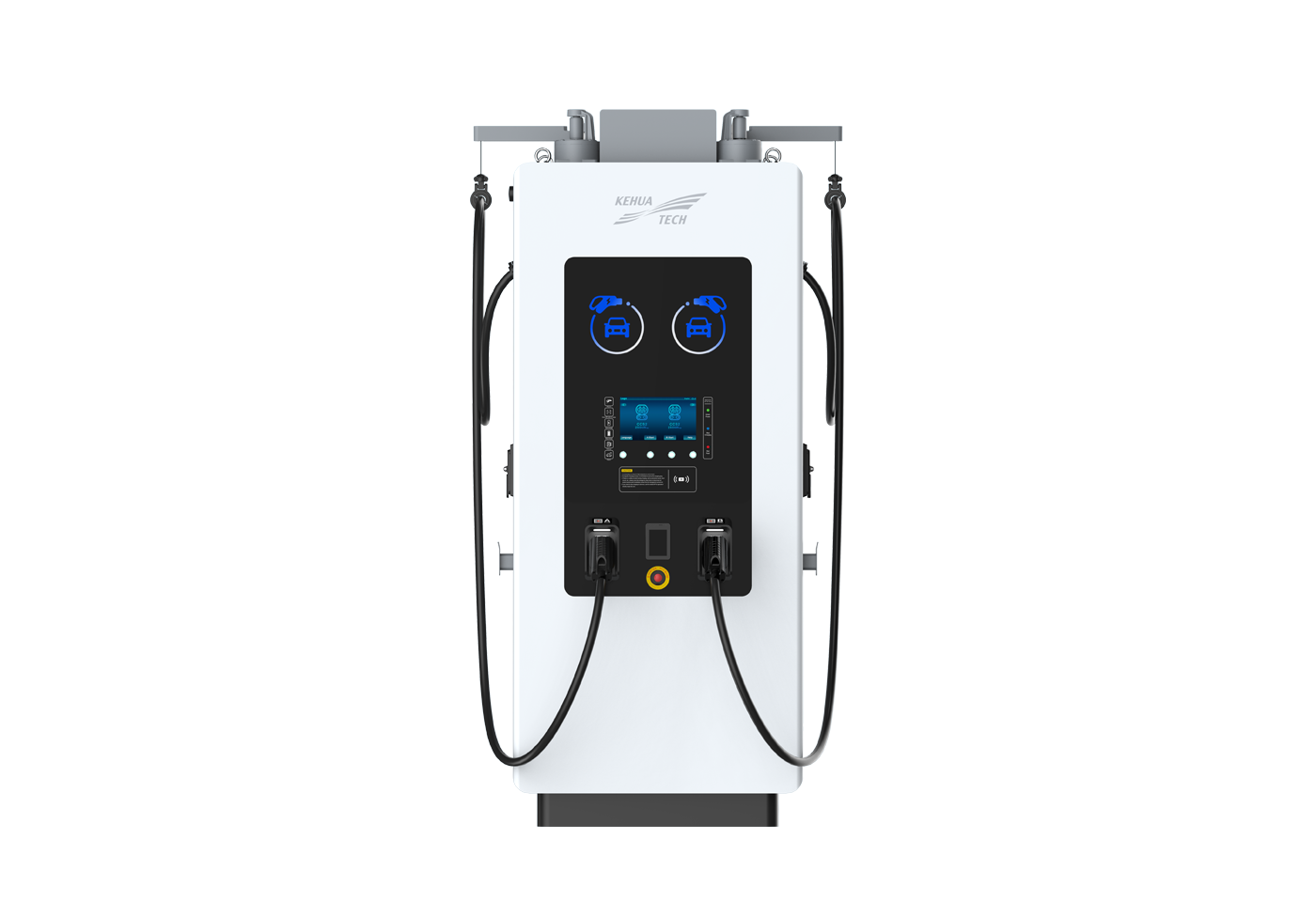
An integrated DC charger is an all‑in‑one unit that combines the power conversion module, controller, and user interface in a single enclosure. Power electronics convert AC from the grid into DC inside the cabinet and deliver it directly to the vehicle through one or more dispensers.
Because everything is inside a compact footprint, integrated DC chargers are easy to deploy at small and medium stations like depot corners, retail sites, and workplace parking. Kehua's integrated DC charger portfolio spans 60–400 kW, giving fleets a straightforward way to deploy fast charging where space and permitting timelines are tight.
What is a Distributed Charging System?
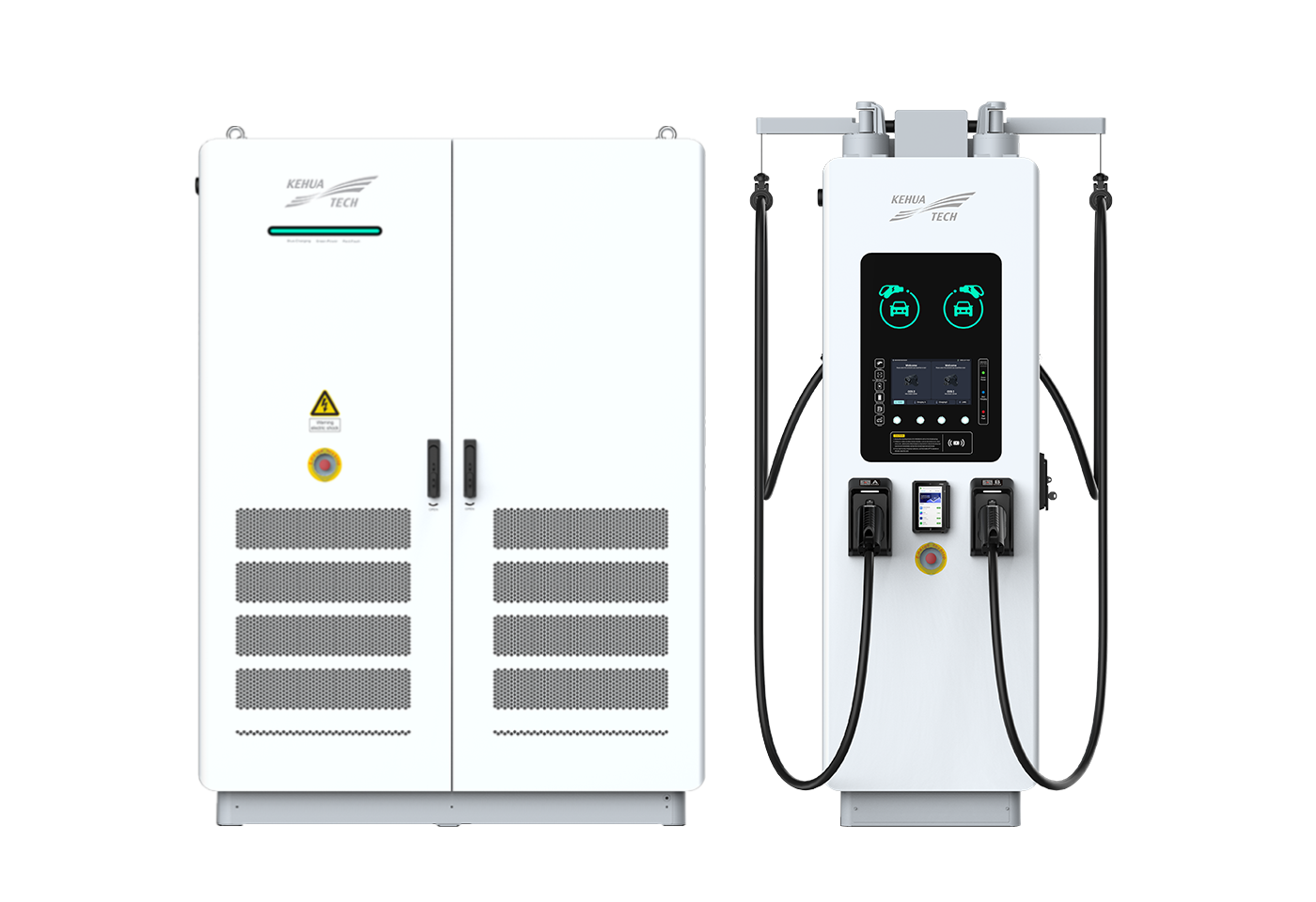
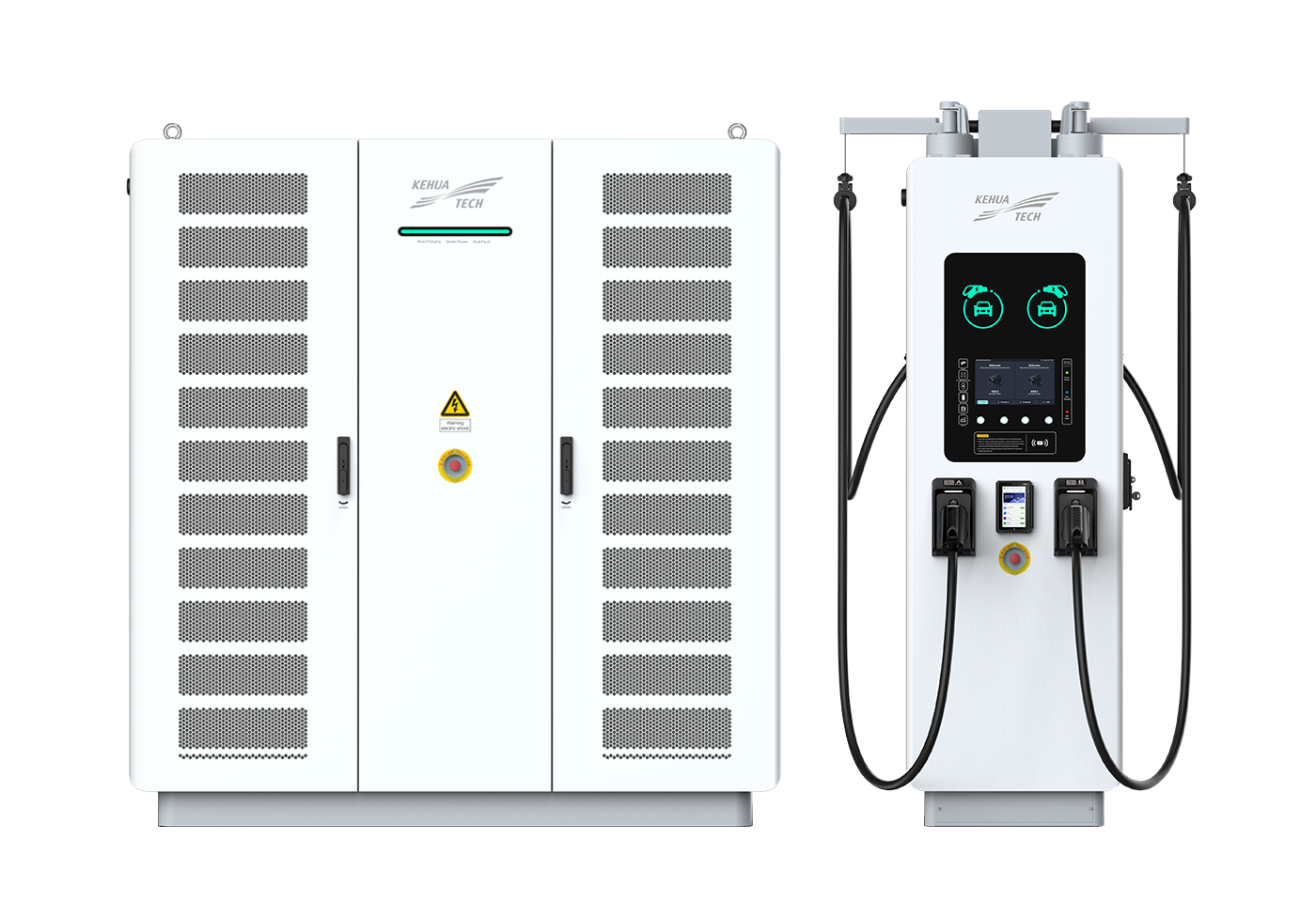
A distributed DC charging system decouples the central power conversion "cabinet" from the individual charging dispensers. In this architecture, a high‑power central unit converts AC to DC and then distributes DC to many satellite dispensers via low‑voltage DC cabling.
This design supports dynamic power allocation , letting the system intelligently share capacity across multiple vehicles in real time. Vendors report that a single distributed system can feed many dispensers, depending on configuration and power level. For large depots, bus yards, and logistics hubs, this model aligns closely with 2026 trends toward megawatt‑scale, site‑level infrastructure.
Architecture at a Glance: Integrated vs. Distributed
Design and Infrastructure Differences
Integrated DC chargers:
- Self‑contained cabinets, each with its own rectifier, controller, and cooling system.
- Typically deployed as multiple standalone units across a site.
- Each charger connects individually to the low‑voltage distribution board.
Distributed charging systems:
- One or more centralized power cabinets sized up to several hundred kilowatts or megawatts.
- Multiple dispensers connected via DC bus wiring.
- Shared cooling and control, enabling coordinated load management.
For operators planning hundred‑megawatt charging hubs or megawatt‑class truck depots, distributed architectures support clustering, microgrid‑ready integration, and future‑ready upgrades more efficiently than purely integrated layouts.
Key Pros and Cons for Fleet Operators
Integrated DC charger advantages:
- Lower initial CAPEX per point due to simpler design and installation.
- Faster permitting and deployment, ideal for pilot projects or incremental expansion.
- Fault isolation (one unit fails, others remain in service).
Integrated DC charger limitations:
- Limited scalability ; adding capacity usually means adding more standalone units.
- Fixed power per unit, with less flexibility to reallocate power between dispensers.
Distributed charging system advantages:
- High scalability ; adding more dispensers often requires only cabling and civil works.
- Dynamic power distribution improves asset utilization and charging times.
- Easier to implement smart site‑level energy strategies such as demand management and peak shaving.
Distributed charging system limitations:
- Higher upfront engineering and installation complexity .
- Central power cabinet becomes a critical asset that must be designed for redundancy.
Scalability for Your 2026 Fleet Plan
How Fast Is Your Fleet Growing?
Global EV charging infrastructure is shifting from rapid, scattered deployment to optimized, scalable sites as adoption patterns mature. At the same time, commercial fleets are moving toward megawatt‑level charging for heavy‑duty logistics, making scalability and flexibility central design criteria.
When planning your 2026 fleet roadmap, consider:
- Fleet size growth rate : Are you doubling vehicles every 12–24 months, or growing steadily at 10–20% per year?
- Vehicle mix : Passenger EVs, light commercial vans, or heavy trucks with high‑power charging needs?
- Operational model : Opportunity charging during operation vs. overnight depot charging.
For fast‑scaling depot fleets , a distributed charging system typically delivers better reuse of existing capacity as vehicles and routes evolve. For slower growth or multi‑tenant retail sites, integrated DC chargers can align better with incremental ROI and risk control.
Scalability Model Comparison Table
Scalability Attributes for 2026 Fleet Plans
| Attribute | Integrated DC Charger | Distributed Charging System |
|---|---|---|
| Typical power per unit | 60–400 kW per cabinet | Hundreds of kW to multi‑MW central cabinets |
| Expansion method | Add more standalone units | Add dispensers, upgrade central power blocks |
| Power allocation | Fixed per charger | Dynamic, shared across dispensers |
| Site complexity | Low–medium | Medium–high |
| Best fit scenarios | Retail, workplace, small depots | Large depots, bus yards, truck hubs |
This structured comparison helps search engines parse intent around "which scalability model fits your fleet plan" while helping users quickly map each option to their own 2026 deployment scenario.
TCO and ROI: Budgeting Beyond CAPEX
Total Cost of Ownership Considerations
Fleet operators increasingly focus on total cost of ownership (TCO) rather than only upfront CAPEX, especially as EV charging revenue and operating models mature. TCO spans hardware, installation, maintenance, energy costs, grid upgrades, and downtime risks.
Integrated DC chargers often win on initial CAPEX per dispenser , thanks to simpler civil and electrical work. However, if fleet size grows rapidly, repeated additions of standalone units can lead to complex wiring, uneven utilization, and higher long‑term maintenance overhead.
Distributed charging systems may require higher upfront investment for centralized infrastructure but tend to deliver:
- Higher asset utilization through load‑sharing and dynamic scheduling.
- Improved energy cost optimization via demand management and intelligent power control.
- Better future‑proofing against technology shifts (e.g., higher charging power, new connector standards).
Example: Medium vs. Large Fleet ROI
- A 50‑vehicle light commercial fleet with staggered depot dwell times can often be served effectively with multiple integrated DC chargers , especially if budget and timelines are tight.
- A 200‑vehicle mixed fleet or a regional logistics hub will usually extract more value from a distributed charging system that can scale to megawatt‑level power and integrate PV+storage‑ready designs for long‑term energy savings.
By modeling multi‑year TCO, including grid connection costs and energy tariffs, operators typically find that distributed architectures deliver superior ROI for large, high‑utilization sites.
Reliability, Maintenance, and Uptime
Failure Modes and Redundancy
Reliability is a core requirement of commercial charging networks, especially where high‑power chargers and on‑site storage are involved. Different architectures handle failures differently:
- Integrated DC chargers: A fault usually affects only the individual unit; the rest of the site stays online. This simplifies risk management but can create service variability if many units are scattered.
- Distributed charging systems: The central cabinet becomes a single point of high importance; however, modular power blocks and redundant feeders can significantly reduce the impact of failures.
Kehua's experience in power electronics and data‑center‑grade power solutions supports modular design and intelligent failure handling, allowing distributed systems to meet stringent uptime requirements.
Operations and Maintenance (O&M) Strategy
From a fleet operator's perspective:
- Integrated chargers simplify field service because each unit can be replaced or serviced individually; however, stocking many variants and managing multiple dispersed cabinets can increase logistics effort.
- Distributed systems concentrate most power electronics in one location, easing access for technicians and enabling coordinated upgrades.
A hybrid deployment leveraging both architectures can optimize O&M: integrated chargers at remote or low‑usage locations, and distributed systems at high‑density depots.
Grid, PV, and Energy Storage Integration
Why DC‑Linked PV+Storage Matters in 2026
Industry trends show growing adoption of DC‑linked energy storage and charging to increase effective site capacity without expensive grid upgrades. DC‑linked architectures allow PV and batteries to feed charging systems more efficiently than purely AC‑coupled solutions.
Kehua provides PV plus energy storage plus charging solutions that integrate:
- DC charging modules and distributed systems.
- C&I storage solutions tailored to site load profiles.
- Intelligent algorithms for site‑level power allocation and scheduling .
This approach is particularly relevant for industrial park microgrids , where integrated PV–Storage–Charging–Vehicle–Cloud ecosystems can operate either connected to or independent from the main grid.
Which Architecture Integrates Better?
- Integrated DC chargers can connect into PV+storage systems but may not fully exploit shared DC buses and dynamic site‑level control.
- Distributed charging systems are naturally aligned with DC‑linked storage and microgrid architectures, improving flexibility for high‑power fleet depots.
For operators planning megawatt‑level depots or logistics hubs by 2026, distributed systems with PV+storage‑ready design are often the most future‑proof pathway.
Expert View: How to Choose for Your 2026 Plan
A Practical Decision Framework
From an industry expert and fleet‑planning perspective, you can use this framework:
1. Assess fleet strategy to 2026 and beyond
- Stable or slow growth: favor integrated DC chargers for simplicity and incremental investment.
- Aggressive growth or heavy‑duty electrification: prioritize distributed systems for scalable megawatt capacity.
2. Analyze grid and site constraints
- Limited grid capacity, high demand charges, or remote locations: combine distributed systems with PV+storage‑ready solutions and intelligent scheduling.
- Strong grid connections in small sites: integrated chargers can be sufficient.
3. Define operational priorities
- Time‑sensitive opportunity charging (e.g., logistics turnaround): distributed systems with dynamic power allocation maximize throughput.
- Overnight depot charging with predictable schedules: integrated chargers can meet needs cost‑effectively.
4. Plan for resilience and future standards
- For emerging high‑power standards for trucks, distributed architectures with modular blocks provide smoother upgrades.
Where Shenzhen Kehua Fits In
With decades of power electronics experience and a large R&D team, Kehua offers end‑to‑end EV charging solutions spanning DC modules, integrated DC chargers, high‑power distributed systems, megawatt‑class charging, and PV+storage‑ready configurations. This broad portfolio allows you to combine both architectures under one unified technology and service ecosystem.
By partnering with Kehua, fleet and infrastructure owners can plan phased deployment: start with integrated DC chargers for initial sites, then layer distributed systems and PV+storage‑ready designs as fleets scale toward 2026 targets.
Five Actionable Steps to Select Your Scalability Model
Step 1 – Map today's and 2026 fleet profiles
- Classify vehicles by segment (passenger, LCV, bus, heavy truck) and charging windows.
- Estimate 2026 peak concurrent charging demand in kW/MW using fleet duty cycles.
Step 2 – Audit grid connection and energy costs
- Evaluate available connection capacity, upgrade timelines, and tariff structures.
- Identify potential sites for PV rooftop or ground‑mount deployment plus storage.
Step 3 – Select base architecture per site
- Low‑volume or mixed‑use sites: integrated DC chargers with moderate power (60–180 kW) per dispenser.
- High‑volume depots: distributed charging systems with central cabinets sized for forecasted demand and multiple dispensers.
Step 4 – Layer in PV+storage and microgrid‑ready capabilities
- Use DC‑linked PV+storage systems to increase effective power and stabilize costs.
- Implement intelligent scheduling for fleet charging windows.
Step 5 – Standardize hardware and software platforms
- Adopt a common platform for monitoring, billing, diagnostics, and optimization.
- Plan firmware and hardware upgrade paths for future standards and higher power levels.
CTA: Align Your 2026 Fleet Plan with Future‑Ready Infrastructure
If you are planning a 2026 fleet expansion, now is the time to define your scalability model and grid strategy. For many operators, the winning approach is a hybrid deployment : integrated DC chargers for flexible deployments and a distributed charging system with PV+storage‑ready design for high‑density depots.
Shenzhen Kehua Hengsheng Technology Co., Ltd. can help you evaluate your fleet profiles, grid constraints, and investment horizons to design the optimal mix of integrated DC chargers, distributed charging systems, and PV‑plus‑storage solutions.
Contact our team to discuss a customized 2026 fleet charging roadmap that balances scalability, reliability, and total cost of ownership.
FAQ: Integrated DC Charger vs. Distributed Charging System
1. Which is better for a small fleet starting EV adoption in 2026?
For small fleets with fewer than 50 vehicles and moderate power needs, integrated DC chargers often provide a simpler, lower‑cost starting point while still supporting fast charging.
2. When should I choose a distributed charging system?
Distributed systems are most suitable for large depots, bus yards, and logistics hubs where many vehicles must be charged in parallel and site power may grow toward megawatt levels.
3. Can integrated DC chargers and distributed systems coexist at the same site?
Yes, many operators deploy integrated DC chargers at the periphery and distributed systems in core depot areas, optimizing space use and investment by matching architecture to demand density.
4. How does PV+storage affect my choice of architecture?
PV+storage tends to align better with distributed systems due to DC‑linked site‑level control, but integrated DC chargers can still benefit from reduced grid loads and lower energy costs.
5. What role does intelligent control play in future charging networks?
Advanced control platforms will increasingly coordinate cloud, station, charger, and vehicle data to optimize scheduling, energy costs, and maintenance for both integrated and distributed architectures.
References
1. Integrated vs. distributed EV chargers: business impacts and definitions – Charge Ninja Blog. Available at:
2. Shenzhen Kehua Hengsheng Technology Co., Ltd. – Company profile and EV charging solutions, including DC chargers, distributed systems, and PV‑plus‑storage‑ready offerings. Available at:
https://www.kehuasz.com/company-profile.html
3. Shenzhen Kehua Hengsheng Technology Co., Ltd. – Global website and product portfolio including DC charging modules, integrated DC chargers, high‑power distributed systems, megawatt charging, and PV+storage‑ready solutions. Available at:
Hot Tags: Integrated DC Charger, Distributed Charging System, Manufacturers, Customized, Custom, Suppliers, Buy, Cheap, Quality, Advanced, Durable, in Stock, Free Sample, Made in China, Price, Quotation

